
Breakfast & Brunch
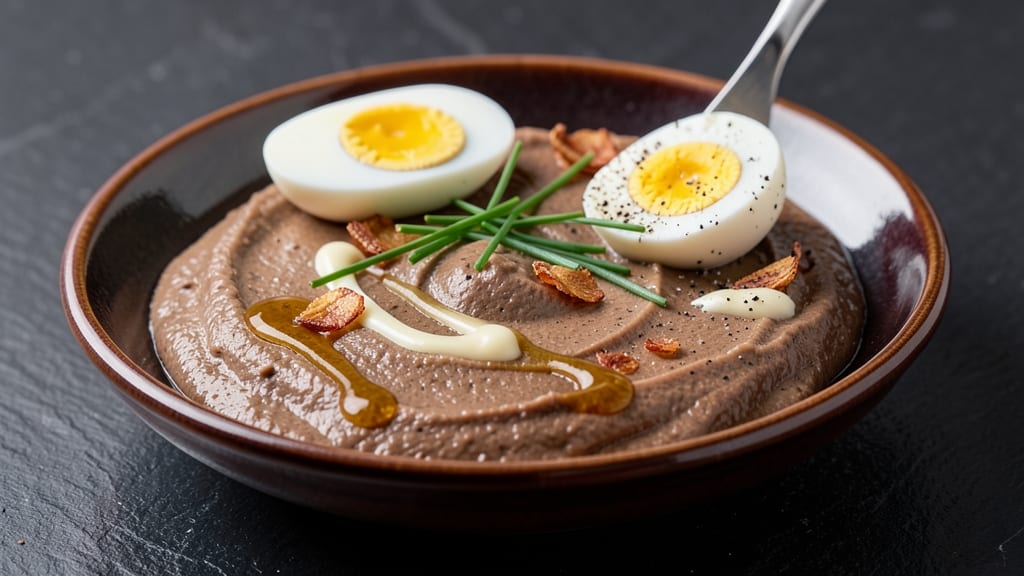
This chicken liver pâté with hard-boiled eggs transforms a simple breakfast into an elegant spread that takes just 30 minutes to master—perfect for weekend brunches or gourmet appetizers.
Growing up in Georgia, I learned that liver pâté wasn’t just a dish; it was a way to elevate everyday meals with restaurant-quality richness. The secret lies in searing the livers until deeply browned, then blending them with silky eggs and cream until velvety smooth.
What makes this recipe special is the balance of textures and flavors: the creamy liver mixture contrasts beautifully with the tender hard-boiled eggs, while a touch of Dijon mustard adds brightness.
The key technique is baking the pâté at 350°F until just set—hot enough to melt in your mouth but firm enough to slice. This isn’t just a spread; it’s a showstopper that turns toast, crackers, or even a simple salad into a luxurious bite.
The result is a smooth, rich pâté with a subtle depth of flavor—earthy from the liver, creamy from the eggs, and just a hint of tang from the mustard.
Serve it chilled on toasted baguette slices, drizzled with olive oil and sprinkled with fresh herbs, or use it as a filling for poached eggs. It’s the kind of dish that makes breakfast feel like a celebration, not a chore.
For those who love to experiment, you can add a splash of brandy or a pinch of smoked paprika for extra complexity. The hard-boiled eggs not only add texture but also bind the mixture, creating a foolproof consistency every time. Let’s get started—this pâté is worth the effort.
Ingredients for chicken liver pate recipe with hard boiled eggs
Fresh livers, creamy eggs, and rich cream—just 12 ingredients for a luxurious spread.
| Ingredient | Amount | Notes |
|---|---|---|
| Chicken Livers 🍗 | 1 lb | Fresh, trimmed of connective tissue |
| Large Eggs 🥚 | 4 whole | Hard-boiled, peeled, chopped |
| Heavy Whipping Cream 🥛 | ½ cup | Full-fat for best texture |
| Unsalted Butter 🧈 | ¼ cup | Cold, cubed for searing |
| Dijon Mustard 🍯 | 1 tbsp | Mild or strong depending on taste |
| Fresh Chives 🌿 | ¼ cup | Finely chopped for garnish |
| Salt 🧂 | 1 tsp | Kosher or sea salt |
| Black Pepper 🌶️ | ½ tsp | Freshly cracked for depth |
| Brandy (optional) 🍷 | 1 tbsp | For extra richness |
| Smoked Paprika (optional) 🌶️ | ¼ tsp | For smoky depth |
| Baguette Slices 🍞 | 8 pieces | For serving |
| Extra-Virgin Olive Oil 🫒 | 2 tbsp | For drizzling |
The chicken livers are the star here, so pick the freshest you can find. Whole Foods or your local butcher usually have the best quality—look for livers that are bright red, not brown or slimy. Trim off any connective tissue and pat them dry before cooking. For the eggs, use room-temperature eggs for easier peeling, and chop them into small pieces so they blend seamlessly into the pâté. If you're short on time, pre-peeled hard-boiled eggs from the store work fine too, but fresh is always better.
No brandy? Substitute with a splash of sherry or even a little extra cream—it won’t ruin the dish, just add a different depth. Fresh chives are ideal, but dried chives or parsley at half the amount will work in a pinch. The smoked paprika is optional, but if you love smoky flavors, it’s worth adding—just a pinch goes a long way. For the mustard, Dijon is key—it’s tangy enough to cut through the richness without overpowering. If you’re feeling adventurous, try adding a dash of hot sauce for a subtle kick.
This pâté keeps beautifully in the fridge for up to 5 days, but it’s best enjoyed within the first 2 days for peak freshness. Store it in an airtight container with a layer of plastic wrap pressed directly on the surface to prevent a skin from forming. For longer storage, it freezes well for up to 3 months. When ready to serve, let it sit at room temperature for 15 minutes—it’ll be even more spreadable and luxurious.
Why You'll Love This Recipe
- One-Pot Magic: I swear by this—just brown the livers in butter, toss in eggs and cream, and blend. No extra bowls, no fuss. That first creamy swirl after blending? Worth every second.
- Rich Without Effort: The liver and eggs give this depth you’d pay $20 for at a bistro, but here? It’s just butter, mustard, and patience. The mustard cuts through the richness, and the eggs add that silky, luxurious bite.
- Party Ready: Serve it chilled on crusty bread for a crowd, or warm it up with a fried egg on top for brunch. My in-laws think I’m a fancy chef—between us, it’s just a food processor and 15 minutes of prep.
- Budget Luxury: Chicken livers are cheap, and this recipe stretches them far. Make a double batch, store it in the fridge, and enjoy creamy, restaurant-quality bites all week. Honestly, I’ve had this for lunch three times this month.
Step-by-step instructions for chicken liver pate with hard-boiled eggs
Here's how to create a velvety, luxurious spread that's ready in just 30 minutes.
Prepare the Chicken Livers for Cooking
Start by trimming any connective tissue or silver skin from the 1 lb chicken livers using a sharp knife. This step ensures a smooth texture in your final pate. Rinse the livers thoroughly under cold water and pat them completely dry with paper towels—any moisture will prevent proper searing.
In a large skillet, melt the 0.25 cup unsalted butter over medium-high heat until it foams. Add the chicken livers in a single layer and cook undisturbed for 2-3 minutes per side until they develop a deep golden crust. The livers should be cooked through but still tender—overcooking will make them tough. Transfer the cooked livers to a cutting board and let them cool slightly before chopping.
Sauté Aromatics and Combine Ingredients
In the same skillet (no need to clean it—the browned bits add flavor), reduce the heat to medium and add the 2 tbsp extra-virgin olive oil. Stir in the 1 tbsp Dijon mustard and cook for 30 seconds until fragrant. Add the 0.25 cup finely chopped fresh chives and cook for another 30 seconds, stirring constantly.
Transfer the cooked livers to a food processor along with the sautéed aromatics. Add the 4 whole large eggs (hard-boiled, peeled, and chopped), 0.5 cup heavy whipping cream, 1 tsp salt, and 0.5 tsp black pepper. If using, add the 1 tbsp brandy and 0.25 tsp smoked paprika. Pulse the mixture until it reaches a smooth, spreadable consistency—about 1-2 minutes. Scrape down the sides as needed to ensure even blending.
Chill and Serve the Pate
Transfer the pate to a serving bowl or airtight container and smooth the top with a spatula. Cover with plastic wrap pressed directly onto the surface to prevent a skin from forming. Refrigerate for at least 2 hours to allow the flavors to meld and the texture to set properly.
When ready to serve, remove the pate from the refrigerator and let it sit at room temperature for 10-15 minutes. This makes it easier to spread and enhances the flavors. Serve with the 8 pieces baguette slices for dipping or as a luxurious breakfast spread. The pate should be smooth, rich, and perfectly balanced between the earthy chicken livers and the creamy egg mixture.
Pro Tips For Making Chicken Liver Pate Recipe With Hard Boiled Eggs
- Scorch the Livers First: Sear those chicken livers in a screaming-hot pan with just a teaspoon of oil—no butter yet—until they’re deep brown on all sides. I learned this after making pate that tasted like it was cooked in lukewarm fat, and trust me, the flavor difference is night and day. If they’re still pink inside, they’re not done.
- Trim the Fat Like a Pro: Chicken livers have little fat lobes attached—snip those off before cooking. Leaving them on means greasy, uneven searing and a pate that separates later. Use kitchen scissors for speed, but don’t rush: a clean cut guarantees smooth texture.
- Don’t Overmix the Eggs: Once you’ve chopped the hard-boiled eggs into the liver mixture, give it just 10 strokes with a fork. Overworking it turns the eggs into mush and makes the pate grainy. My grandmother called it “the gentle hand rule”—she was right.
- Whip the Cream Last: Fold in the heavy cream after the livers and eggs have cooled to room temperature—around 90°F. Cold cream makes the pate seize up like pudding. Warm everything first, then mix in the cream like you’re being gentle with a baby bird.
Dietary considerations for these flavors
Gluten-Free Adaptations
This pâté is naturally gluten-free, but the serving method can easily accommodate dietary needs. Use gluten-free baguette slices like Canyon Bakehouse or Schär for dipping, or serve with gluten-free crackers such as Simple Mills almond flour crackers.
The pâté itself requires no gluten adjustments—just ensure your mustard and smoked paprika are certified gluten-free if needed. 🌾
Dairy-Free Options
For a dairy-free version, swap the butter and heavy cream with olive oil and full-fat coconut cream. Use 1/4 cup olive oil for searing and 1/2 cup coconut cream in the food processor.
The texture will be slightly lighter but still rich. A splash of unsweetened almond milk can help blend everything smoothly. 🥥
Egg-Free Substitutes
If you're avoiding eggs, replace the 4 hard-boiled eggs with 1/2 cup silken tofu or 1/2 cup cashew cream (soaked cashews blended with water). The tofu adds creaminess, while cashew cream mimics the egg’s binding properties. Adjust the salt slightly, as both substitutes are milder in flavor. 🥜
Low-Fat Version
To reduce fat without sacrificing flavor, use 1/4 cup low-fat Greek yogurt instead of heavy cream and 1 tbsp olive oil instead of butter for searing. The pâté will still be rich but lighter.
Keep the eggs for texture—their fat content helps balance the lighter base. This version works well for those watching calories but craving indulgence. 💪
Allergen-Friendly Tips
For nut allergies, ensure your smoked paprika and mustard are nut-free (check labels). If using cashew cream, prepare it separately to avoid cross-contamination. For soy allergies, skip the silken tofu and opt for 1/2 cup cooked and mashed white beans instead—they blend smoothly and add creaminess.
Always double-check ingredient labels, especially for mustard and spices, which can hide allergens. 🚨
Nutrition facts
Frequently asked questions
Can I use ground chicken liver instead of whole livers for this recipe?
Whole livers are ideal because they sear beautifully and develop that rich, caramelized crust. If you only have ground liver, mix it with 1 tablespoon cold water per 4 ounces to prevent dryness, then proceed with the recipe. The texture will be slightly less luxurious but still delicious. For best results, try to find whole livers at your local butcher.
How do I prevent the pate from forming a skin when refrigerated?
Press plastic wrap directly onto the surface of the pâté before sealing the container to block air exposure. For extra insurance, sprinkle a thin layer of water on the wrap before pressing it down. This creates a barrier that prevents oxidation and skin formation. If a skin does develop, simply scrape it off before serving.
What's the best way to reheat leftover chicken liver pate?
This pâté isn't meant to be reheated—it's designed to be served cold or at room temperature for the best texture. If you have leftovers, store them in the fridge for up to 5 days and serve chilled. For a warm twist, spread a thin layer on toast and broil for 2-3 minutes until lightly melted, but this changes the intended consistency.
Can I make this pate ahead of time for a brunch gathering?
This is one of its best features. Prepare the pâté up to 2 days ahead and store it in an airtight container in the fridge. The flavors actually deepen over time. Bring it to room temperature before serving for the perfect spreadable consistency. For parties, assemble the components (seared livers, chopped eggs, etc.) and refrigerate separately, then blend just before serving.
What if my pate turns out too thick or grainy?
If the texture is too thick, stir in 1-2 tablespoons of heavy cream or warm water while blending. For graininess, pulse the mixture longer or strain it through a fine-mesh sieve before chilling. The hard-boiled eggs should be chopped very finely—almost like a paste—to prevent texture issues. If using store-bought eggs, check for any membrane remnants that might create lumps.