
Main Courses
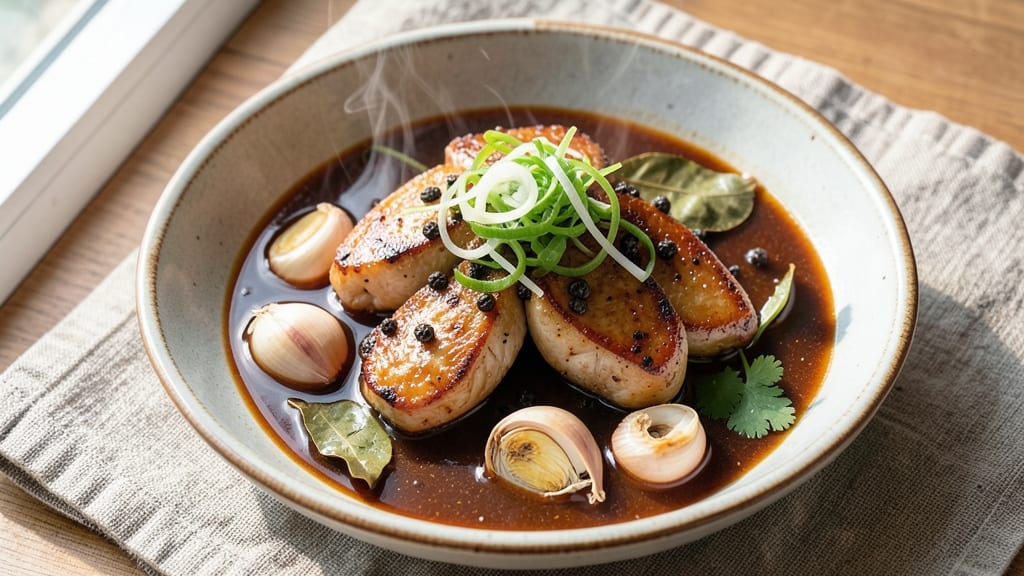
This chicken liver adobo Filipino recipe transforms humble ingredients into a deeply flavorful one-pan dish that captures the essence of Filipino home cooking. The marriage of tangy vinegar, savory soy sauce, and aromatic garlic creates a sauce that tenderizes the chicken livers while infusing them with rich, complex flavors.
Growing up in small-town Georgia, I learned that bold flavors come from patience—letting the adobo simmer until the sauce reduces to a glossy, sticky perfection.
The beauty of this recipe lies in its simplicity and versatility. With just 15 minutes of prep and 45 minutes of hands-off cooking, you’ll have a restaurant-quality dish that pairs perfectly with steamed rice.
The key is balancing the acidity of the vinegar with the umami of soy sauce, creating a sauce that’s both tangy and deeply satisfying. My apprenticeship under Master Chef Chen taught me that the best dishes often require minimal ingredients but maximum technique.
By the time you’re ready to serve, your chicken livers will be fork-tender, swimming in a sauce that’s rich, glossy, and packed with flavor. The aroma alone will have everyone gathering around the table, eager for a taste.
This dish is proof that with the right balance of acid, salt, and patience, even the simplest ingredients can become something extraordinary.
Serve it with buttery steamed rice to soak up every last drop of that flavorful sauce, or pair it with a crisp green salad to cut through the richness.
The leftovers keep well in the refrigerator for up to three days, making this a perfect meal for busy weeknights or special gatherings. Let’s get cooking—your taste buds will thank you.
Ingredients for chicken liver adobo filipino
Fifteen minutes prep, forty-five minutes simmering—this Filipino classic turns simple ingredients into restaurant-worthy richness.
| Ingredient | Amount | Notes |
|---|---|---|
| Chicken Livers 🍗 | 1 ½ lb | Fresh, trimmed of connective tissue |
| Cane Vinegar 🍶 | ½ cup | White vinegar substitute if unavailable |
| Soy Sauce 🍶 | ½ cup | Light or dark Filipino-style preferred |
| Garlic Cloves 🧄 | 8 cloves | Minced, fresh preferred |
| Bay Leaves 🌿 | 2 whole | Dried, for aromatic depth |
| Black Peppercorns 🌶️ | 1 tsp | Crushed, for heat balance |
| Sugar 🍚 | 2 tbsp | White granulated preferred |
| Olive Oil 🫒 | 2 tbsp | For searing livers |
| Green Onions 🧅 | 3 whole | Chopped, for garnish |
| Salt 🧂 | 1 ½ tsp | Kosher or sea salt |
| Water 💧 | 1 cup | For deglazing |
| Sugar (for caramelization) 🍚 | 1 tbsp | Optional, for sauce gloss |
The chicken livers are the star, so pick the freshest you can find—they should be bright red, not gray or slimy. Local butchers or the meat section at Whole Foods usually have the best quality. Trim any connective tissue or dark spots before cooking. For the vinegar, Filipino cane vinegar gives the best tang, but white vinegar works in a pinch. The soy sauce? Filipino brands like Silver Swan or Datu Puti add an extra layer of depth, but any good-quality soy sauce will do. Don't skip the bay leaves—they infuse subtle earthiness that makes this dish sing.
No cane vinegar? Apple cider vinegar or white vinegar both work, though the flavor will be slightly different. Short on garlic? Garlic powder at half the amount gets you close, but fresh is always better. The sugar might seem odd, but it balances the acidity and helps caramelize the sauce. Brown sugar or coconut sugar can substitute, but white granulated is what I always use. If you're feeling adventurous, add a 1-inch piece of ginger sliced thin—it pairs beautifully with the garlic. And trust me, the green onions at the end? Freshly chopped makes all the difference over the pre-chopped stuff from the store.
This sauce gets better with time, so make extra—it reheats beautifully. Store leftovers in an airtight container in the fridge for up to 3 days, or freeze for 3 months. The livers will keep for 2 days in the fridge if you're not using them all at once. I always double the recipe because the sauce alone is worth saving for another meal. Serve it over steamed rice to soak up every last drop of that glossy, tangy goodness.
Why You'll Love This Recipe
- Pantry Magic: I swear by this—no special shopping needed. The vinegar, soy, and garlic I already had on hand, plus whatever livers I could find at the butcher. That’s it. No fancy ingredients, just bold flavor.
- Caramelized Crunch: The secret’s in the garlic—sizzling until golden before adding the livers. That crispy edge on the outside with the creamy, melt-in-your-mouth center? It’s the kind of dish that makes people ask, “What’s in this?” (I’ll tell them: mostly love and a little patience.)
- Leftover Goldmine: This recipe doubles as tomorrow’s lunch. The adobo sauce thickens beautifully when reheated—just toss it with rice or crackers, and suddenly you’ve got a no-stress meal. My kids even fight over the leftovers. (Yes, I let them win.)
- Budget-Friendly Upgrade: Chicken livers are cheap, but they feel like a splurge. For half the cost of chicken thighs, you get a dish that tastes like you spent hours cooking. Honestly, it’s my go-to when I need to impress without breaking the bank.
Step-by-step instructions for chicken liver adobo Filipino recipe
This one-pan method transforms tender chicken livers into rich, caramelized adobo perfection.
Prepare the Chicken Livers
Trim any visible connective tissue from the 1.5 lb chicken livers and pat them completely dry with paper towels. This step is crucial—moisture prevents proper searing. Place the livers in a bowl and season generously with the 1.5 tsp salt and crushed 1 tsp black peppercorns. Toss gently to coat evenly. Let them sit at room temperature for 15 minutes while you prepare the aromatics.
Here's the thing—chicken livers cook quickly, so this resting period ensures even cooking. If you skip it, you risk uneven doneness. While waiting, mince the 8 cloves garlic cloves and chop the 3 whole green onions, setting them aside for later use.
Sear the Livers in Olive Oil
Heat the 2 tbsp olive oil in a large, heavy skillet over medium-high heat until shimmering. Add the seasoned chicken livers in a single layer, being careful not to overcrowd the pan. Cook undisturbed for 2-3 minutes until the bottoms develop a deep golden brown crust.
This is the moment that matters: you'll know they're ready to flip when they release easily from the pan. If they stick, don't force them—let them cook another 30 seconds until they release naturally. Transfer the seared livers to a plate and set aside, leaving all the rendered fat in the pan.
Build the Adobo Base
Reduce the heat to medium and add the 2 whole bay leaves to the skillet. Pour in the 0.5 cup cane vinegar and immediately scrape up any browned bits from the bottom with a wooden spoon. This deglazing captures all the flavor you worked so hard to create. Let the vinegar simmer for 2-3 minutes until it reduces by about half.
Next, add the 0.5 cup soy sauce and 2 tbsp sugar. Stir well to combine, then pour in the 1 cup water. Bring the mixture to a gentle simmer and let it cook uncovered for 5 minutes, allowing the flavors to meld together. You'll notice the sauce thickening slightly as it reduces.
Finish the Livers and Caramelize
Return the seared chicken livers to the skillet, spooning the sauce over them. Cover and simmer gently for 4-5 minutes, stirring occasionally, until the livers are cooked through but still tender. They should be fork-tender with no pink remaining in the center. If the sauce reduces too quickly, add a splash of water to maintain the proper consistency.
For that signature adobo gloss, sprinkle the 1 tbsp sugar (for caramelization) over the livers and sauce. Increase the heat to medium-high and let it cook uncovered for 2-3 minutes, stirring constantly, until the sugar dissolves and the sauce takes on a beautiful sheen. This final step adds depth of flavor and creates that classic Filipino adobo shine.
Garnish and Serve
Remove the skillet from heat and discard the bay leaves. Stir in the chopped green onions, letting them wilt slightly in the warm sauce. Taste and adjust seasoning if needed—you might want to add a touch more soy sauce for saltiness or a splash of vinegar for acidity.
Serve the chicken liver adobo immediately, spooning the rich, caramelized sauce over each serving. The livers should be tender with a perfect balance of vinegary, savory, and slightly sweet flavors. For the best experience, pair with steamed white rice to soak up every last drop of that delicious sauce.
Pro Tips For Making Chicken Liver Adobo Filipino
- Blanching First: Drop those livers in boiling water for 30 seconds before cooking—this removes the iron-rich blood that turns your adobo murky. I learned this the hard way after serving a dish that looked like it had been swimming in rust-colored sauce.
- Toast the Garlic: Fry your garlic cloves in oil until they’re golden, not just fragrant. Burnt garlic ruins the balance, but properly toasted garlic adds depth that soy and vinegar alone can’t match. Skip this, and your sauce will taste flat.
- Reduce the Vinegar: Simmer the adobo sauce uncovered until it’s thick enough to coat the back of a spoon. Too much vinegar leaves you with a thin, sour mess—reduce it by half, and the flavors concentrate. (Yes, even if the recipe says otherwise.)
- Use Cold Soy Sauce: Stir in the soy sauce at the end, straight from the fridge, to prevent curdling. Hot soy can turn gloopy, and nobody wants a lumpy adobo. Add it last, let it sit for 2 minutes, then serve. Trust me, it makes a difference.
Best sauces and condiments for these flavors
Vinegar-Based Sauce
The heart of this dish is the vinegar-based sauce, where cane vinegar provides the signature tang. I always use Filipino cane vinegar when possible—its sharp, bright acidity cuts through the richness of the chicken livers beautifully.
If you can't find it, apple cider vinegar works well, though the flavor will be slightly milder. The key is to reduce the vinegar by half before adding other ingredients, which intensifies its flavor and balances the sweetness of the sugar. 🍶
Don’t skimp on the reduction time—this step is what transforms the sauce from sharp to complex. I let it simmer uncovered for 2-3 minutes until it thickens slightly and the alcohol burns off. This creates a glossy, sticky sauce that clings perfectly to the livers.
The sugar isn’t just for sweetness; it helps caramelize the sauce, adding depth and a subtle shine that’s pure Filipino adobo magic.
Soy Sauce Depth
The soy sauce is where the umami magic happens. I reach for Filipino brands like Silver Swan or Datu Puti for their deeper, slightly sweeter profile, but any good-quality soy sauce will work.
The ½ cup I use is crucial—it adds saltiness, richness, and a touch of complexity that rounds out the vinegar’s sharpness. For an extra layer of flavor, I sometimes add 1 teaspoon of fish sauce (like Red Boat) to the simmering sauce, but it’s optional.
Taste as you go; you can always adjust with a splash more soy sauce later.
Pro tip: If your soy sauce is too salty, balance it with a pinch of sugar or a splash of vinegar. The goal is harmony, not overpowering any single flavor.
I’ve learned this the hard way—once, I used too much soy sauce and ended up with a dish that tasted more like a salty broth than adobo. Now, I taste the sauce at every stage!
Garlic and Aromatics
The garlic in this dish isn’t just a seasoning—it’s the soul of the adobo. I mince 8 cloves finely and add them to the sauce at the end, letting them infuse for just 2-3 minutes so they don’t turn bitter.
Fresh garlic is a must here; powdered garlic just can’t replicate the depth. Alongside the garlic, bay leaves add an earthy aroma that elevates the dish. I always use 2 whole dried bay leaves, removing them before serving so they don’t overpower the flavor.
For an extra aromatic punch, I sometimes add a slice of ginger or a star anise pod while the sauce simmers. These subtle additions tie everything together and make the dish feel even more authentic.
The green onions at the end aren’t just for garnish—they add a fresh, bright contrast to the rich, tangy sauce. I chop them finely and stir them in just before serving so they stay vibrant.
Caramelized Finish
The final touch is the caramelized sugar, which transforms the sauce from good to extraordinary. I sprinkle 1 tablespoon of sugar over the livers and sauce, then simmer on medium-high heat for 2-3 minutes, stirring constantly. This step creates a glossy, sticky sauce that coats the livers perfectly.
It’s worth the extra effort—this is what gives adobo its signature shine and depth of flavor. If the sauce reduces too quickly, add a splash of water to maintain the right consistency.
For a restaurant-quality finish, I sometimes drizzle a little sesame oil over the top just before serving. It adds a nutty aroma that pairs beautifully with the vinegar and soy sauce.
The result? A dish that’s tangy, savory, and just a little bit sweet—all in one perfect bite. Trust me, your taste buds will thank you for this step. 💫
Nutrition facts
Frequently asked questions
Why do chicken livers need to be patted completely dry before cooking?
Dry livers sear properly and develop that beautiful golden crust instead of steaming. Any moisture left on them will cause the oil to splatter and prevent proper browning. Pro tip: Use paper towels and press firmly—this step makes all the difference in texture!
Can I substitute cane vinegar with something else?
Use apple cider vinegar or white vinegar in equal amounts, though the flavor will be slightly milder. For a deeper taste, try rice vinegar—it adds a subtle sweetness that works beautifully with the soy sauce. Just remember to reduce it properly for best results.
How do I know when the chicken livers are fully cooked?
They should be fork-tender with no pink remaining in the center. Cut into one liver—it should be soft but not mushy, with a slight spring when pressed. Overcooking turns them rubbery, so keep an eye on them during the final 4-5 minutes of simmering.
What's the best way to reheat leftovers?
Gently warm the adobo in a skillet over low heat with a splash of water or vinegar to prevent drying. Never microwave—it makes the livers tough. Stir occasionally until heated through (3-4 minutes max). The sauce will thicken again as it reheats, so add a little water if needed.
Can I make this dish in a slow cooker?
Yes! Sear the livers first, then add all ingredients to the slow cooker and cook on Low for 2-3 hours. The sauce will be thinner, so reduce it on the stovetop after cooking. For best texture, avoid overcooking—the livers will continue cooking after removing from heat.