
Sauces & Condiments
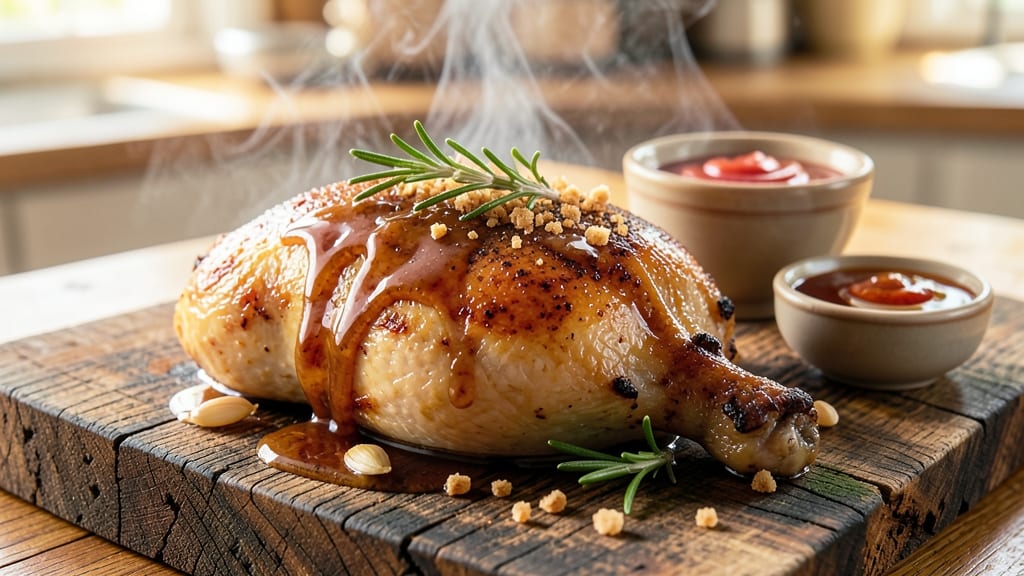
This barbecue chicken basting sauce recipe transforms ordinary grilled chicken into showstopping, fall-off-the-bone perfection. 🔥 The secret lies in its balanced blend of smoky, sweet, and tangy flavors that caramelize beautifully while basting—locking in juices and creating that coveted bark.
I developed this sauce after years of perfecting my pitmaster technique, and it never fails to impress even the most skeptical grill masters.
The sauce's magic comes from a simple yet powerful combination of apple cider vinegar for tang, brown sugar for caramelization, and a touch of liquid smoke for that unmistakable BBQ aroma.
What sets this apart is how it behaves during cooking—it doesn't just add flavor, it transforms the chicken's surface into a flavorful crust while keeping the meat tender inside. The sauce is designed to be brushed on throughout the cooking process, not just at the end.
What you'll achieve is chicken with a deep mahogany crust, sticky-sweet glaze, and juices that practically scream with flavor. The sauce's balance of sweetness and smokiness creates a perfect harmony that works with any BBQ rub or seasoning you prefer.
It's the kind of sauce that turns a simple grilled chicken into the centerpiece of any meal.
Whether you're smoking a whole chicken, grilling breasts, or cooking on a pellet grill, this basting sauce elevates every bite. The recipe makes enough for multiple applications, so you can baste generously without running out.
Let's get started on creating that perfect balance of flavors that will have everyone asking for seconds.
Ingredients for barbecue chicken basting sauce
Eight simple ingredients blend into a sauce that turns grilled chicken into showstopping perfection.
| Ingredient | Amount | Notes |
|---|---|---|
| Apple Cider Vinegar 🍏 | ½ cup | For tangy depth and caramelization |
| Light Brown Sugar 🍚 | ½ cup | Packed for maximum sweetness |
| Liquid Smoke 🔥 | 1 tbsp | High-quality for authentic BBQ flavor |
| Ketchup 🍅 | ¼ cup | Unsweetened for balanced flavor |
| Worcestershire Sauce 🍶 | 1 tbsp | For umami richness |
| Garlic Cloves 🧄 | 3 cloves | Minced for aromatic punch |
| Onion Powder 🧅 | 1 tsp | For subtle depth |
| Smoked Paprika 🌶️ | 1 tsp | Enhances smoky character |
| Salt 🧂 | ½ tsp | Kosher or sea salt |
| Black Pepper 🌶️ | ¼ tsp | Freshly ground for heat |
The apple cider vinegar is non-negotiable—it cuts through the sweetness and adds that essential tang. Bragg or Texas Pete are my go-tos, but any good-quality brand works. Brown sugar should be packed, not scooped—trust me on this. The liquid smoke? Colonial is the gold standard, but Kickapoo works too. For the ketchup, skip the fancy brands—Heinz unsweetened is perfect. Garlic and onion powder are flavor anchors, so don't skimp. I always grab mine from the bulk bins at Whole Foods for freshness.
No apple cider vinegar? White vinegar or lemon juice works in a pinch, but the flavor won't be identical. Swapping brown sugar for white sugar? Add 1/4 tsp cinnamon to compensate for the lost depth. Worcestershire sauce missing? Soy sauce plus a pinch of sugar mimics the umami. For smoky flavor without liquid smoke, a dash of smoked salt plus a pinch of cayenne gets you close. The garlic cloves can be pre-minced from a jar if you're short on time, but fresh is always better.
This sauce keeps beautifully—1 week in the fridge or 6 months in the freezer. I portion mine into ice cube trays for easy single-use applications. If it thickens while storing, just add a splash of water or vinegar to loosen it up. The sauce's magic happens when you baste it on hot chicken, so keep it handy while grilling. Double the batch—you'll want leftovers for brushing on ribs or drizzling over baked beans.
Why You'll Love This Recipe
- No Pantry Haul Needed: I’ll be real—this sauce uses stuff you already own. That bottle of apple cider vinegar gathering dust? The brown sugar lurking in your cabinet? One quick stir, and you’ve got a smoky-sweet glaze that tastes like a Sunday cookout, not a grocery run.
- Smoky-Sweet Magic: The liquid smoke and Worcestershire sauce team up for that deep, charred flavor without the grill. Honestly, the first time I basted my chicken with this, my husband asked if I’d spent hours smoking it—turns out, it’s just five ingredients working together.
- Weeknight to BBQ Hero: Slap this on chicken thighs before dinner, or use it to revive leftover rotisserie chicken for lunch. Between us, it’s my go-to for game day wings, too—no one suspects how little effort went into making them taste like a tailgate.
- Stretches Like a Pro: Make a double batch and store it in the fridge. A splash on grilled veggies, a drizzle over baked beans, or even a quick glaze for tofu—this sauce turns one ingredient into five meals. My freezer’s full of it, and I’m not complaining.
Step-by-step instructions for smoky-sweet BBQ basting sauce
Here's how to create a rich, sticky glaze that'll keep your chicken juicy and flavorful every time.
🍳 Step 1: Build the Flavor Base in a Saucepan
Combine the 0.5 cup Apple Cider Vinegar, 0.5 cup Light Brown Sugar, and 0.25 cup Ketchup in a medium saucepan over medium heat. Stir constantly for 3-4 minutes until the sugar begins to dissolve and the mixture starts to bubble gently. This is where all the magic begins—the vinegar cuts through the sweetness while the sugar starts its caramelization process.
Here's the thing—I like to add the 1 tbsp Liquid Smoke and 1 tbsp Worcestershire Sauce right at this stage. Stir them in and let everything simmer together for another 2 minutes. You should notice the aroma changing—it'll smell deeply smoky with a hint of tangy sweetness. This is your foundation, so don't rush this part. The flavors need time to meld before we add the spices.
🍳 Step 2: Add Aromatics and Spices for Depth
While the base simmers, add the 3 cloves minced Garlic Cloves, 1 tsp Onion Powder, 1 tsp Smoked Paprika, 0.5 tsp Salt, and 0.25 tsp Black Pepper. Stir everything together and let the mixture cook for 3-4 minutes until it begins to thicken slightly. You'll see the garlic release its aroma and the spices bloom—this is when the sauce really starts to come together.
Watch the color carefully. You want it to develop a deep, reddish-brown hue with a glossy sheen. If it starts to stick to the bottom of the pan, add 1-2 tablespoons of water to prevent burning. The sauce should coat the back of a spoon but still be pourable—this is the perfect consistency for basting. If it thickens too much, we'll adjust it later with a splash of water or vinegar.
🔥 Step 3: Simmer and Reduce for Perfect Basting Texture
Reduce the heat to low and let the sauce simmer uncovered for 8-10 minutes, stirring occasionally. This slow reduction is crucial—it concentrates the flavors and creates that perfect sticky consistency that'll cling to your chicken. You're looking for a sauce that's thick enough to coat the back of a spoon but still flows freely when poured.
Here's where it gets fun—taste it and adjust the seasoning if needed. If it needs more tang, add a splash of the Apple Cider Vinegar. If it needs more sweetness, add a pinch of the Light Brown Sugar. The goal is a perfect balance of smoky, sweet, and tangy flavors. Once you're happy with the taste, remove the pan from heat and let the sauce cool slightly—this helps it thicken up just a bit more for that ideal basting consistency.
⏰ Step 4: Strain and Prepare for Use
Let the sauce cool for 5 minutes before straining it through a fine-mesh sieve into a clean bowl. This removes any garlic bits that might be too large for your chicken. The strained sauce should be smooth and glossy with a beautiful deep red color. If the sauce is too thick for your liking, thin it with 1-2 teaspoons of water or Apple Cider Vinegar until it reaches a consistency that'll easily coat your chicken and drip down.
This sauce is best used immediately, but if you need to store it, transfer it to an airtight container and refrigerate for up to 1 week. When you're ready to use it, give it a quick stir and reheat gently over low heat if needed. The sauce will thicken as it cools, so adjust the consistency just before using. Now you're ready to baste that chicken to perfection!
Pro Tips For Making Barbecue Chicken Basting Sauce
- Simmer, Don’t Boil: This sauce isn’t a race—if you bring it to a rolling boil, you’ll burn the brown sugar and turn your glossy glaze into a sticky mess. Keep it at a gentle simmer (tiny bubbles, occasional swirls) for 10-12 minutes, stirring every couple of minutes. I learned this the hard way when my first batch ended up looking like caramelized syrup instead of a rich, smoky sauce.
- Balance the Vinegar First: Apple cider vinegar is the backbone, but too much upfront makes the sauce taste harsh. Start by mixing the vinegar with the brown sugar in a small bowl—let it sit for 5 minutes while you prep the rest. This mellows the acidity before it hits the heat, so your final sauce won’t taste like you’re pickling the chicken.
- Strain the Liquid Smoke: Liquid smoke is finicky stuff—sometimes it’s got sediment that clumps and ruins the texture of your sauce. Pour it through a fine-mesh strainer (or even a coffee filter in a pinch) before adding it to the pot. Yes, it’s an extra step, but you’ll notice the difference in how smooth and even the smokiness coats the chicken.
- Thicken with Ketchup Last: Add the ketchup and Worcestershire near the end of cooking, not at the start. The acid in the vinegar thins the sauce faster than you’d expect, and ketchup’s starch needs time to gel properly. Stir it in during the final 3-4 minutes of simmering—this guarantees a glossy, clingy finish instead of a watery drizzle.
Regional styles of this barbecue chicken basting sauce
Texas-Style Smoky Sweet
This is the sauce I grew up with at my family's backyard cookouts in East Texas. The secret here is using 1 tbsp of liquid smoke plus 1 tsp of smoked paprika for that deep, charred flavor.
I like to add ½ tsp of cayenne pepper to give it just a little kick—something that always gets my dad's approval.
The key technique is basting the chicken in the last 30 minutes of cooking when the grill hits 275°F—this creates that perfect balance of smoky bark and tender meat. 🔥
Carolina Vinegar Cut
In the Carolinas, they take their vinegar seriously, and this sauce reflects that. I swap the apple cider vinegar for ½ cup of white vinegar and add 1 tbsp of hot sauce (I use Crystal for authenticity) to give it that signature tang.
The sauce is brushed on thickly during the final 20 minutes of cooking on a wood-fired pit. The high heat caramelizes the sugar quickly, creating that glossy glaze that's so characteristic of Carolina BBQ. I've seen this technique win rib competitions—it works just as well on chicken.
Kansas City Brown Sugar Glaze
Kansas City is all about that rich, sweet flavor, and this sauce delivers. I increase the brown sugar to ¾ cup and add 1 tsp of ground mustard for depth. The sauce is brushed on generously throughout the entire cooking process, not just at the end.
What sets Kansas City style apart is the 3-2-1 method—sprinkle the rub, then brush with sauce, then repeat. This creates layers of flavor that build with each application. I like to finish with a quick sear over 400°F flames to get that beautiful crust.
Southern Heat Twist
For those who love their heat, I add 1 tbsp of hot honey to the finished sauce and a pinch of cayenne to the rub. This Southern variation keeps all the original flavors but adds a sweet-spicy finish that's perfect for spice lovers.
The honey caramelizes beautifully during basting, creating pockets of sweetness that balance the smokiness. I developed this version after a particularly spicy local BBQ competition where everyone begged for seconds. The secret is to baste in 15-minute intervals during the last hour of cooking.
Coastal Herb Infusion
Living near the coast inspired me to add fresh herbs to this sauce. I stir in 1 tbsp of finely chopped rosemary and 1 tsp of dried thyme during the reduction phase. The herbs add a bright, fresh note that cuts through the richness.
This version works beautifully on grilled chicken breasts and is perfect for summer cookouts. I like to baste it on at 350°F to let the herbs infuse gently without burning. The result is a sauce that's complex and aromatic—something that always gets compliments at my local farmers market demos. 🌿
Nutrition facts
Frequently asked questions
Can I use this basting sauce on other meats besides chicken?
This versatile sauce works beautifully on pork ribs, beef brisket, and even salmon. The smoky-sweet balance complements all these proteins, though you may want to adjust the heat level for beef (reduce the cayenne if using). For fish, reduce the basting time to 10-15 minutes to prevent overcooking.
How often should I baste the chicken during grilling?
Baste every 10-15 minutes during the last 45-60 minutes of cooking for best results. Use a basting brush to apply a thin layer each time, focusing on all sides. The sauce needs time to caramelize, so don't overdo it too early—wait until the chicken reaches 165°F internally before starting.
What if my sauce becomes too thick while cooking?
Simply thin it with 1-2 teaspoons of apple cider vinegar or water while still warm. The sauce should coat the back of a spoon but still flow freely. For extra insurance, keep a small bowl of vinegar nearby during basting sessions—it's the perfect quick fix for thickened sauce.
Can I make this sauce ahead of time?
Yes! Store it in an airtight container in the fridge for up to 1 week or freeze for 6 months. Reheat gently before using—microwave in 20-second bursts while stirring, or warm in a small saucepan over low heat. The sauce will thicken as it cools, so thin with vinegar if needed before basting.
Why does my chicken turn out dry when using basting sauce?
Over-basting or using too much sauce can actually draw moisture out of the chicken. The key is to use it sparingly during the last 30-45 minutes of cooking, and avoid opening the grill lid too often. Let the chicken rest for 10 minutes after cooking before carving to redistribute juices.