
Main Courses
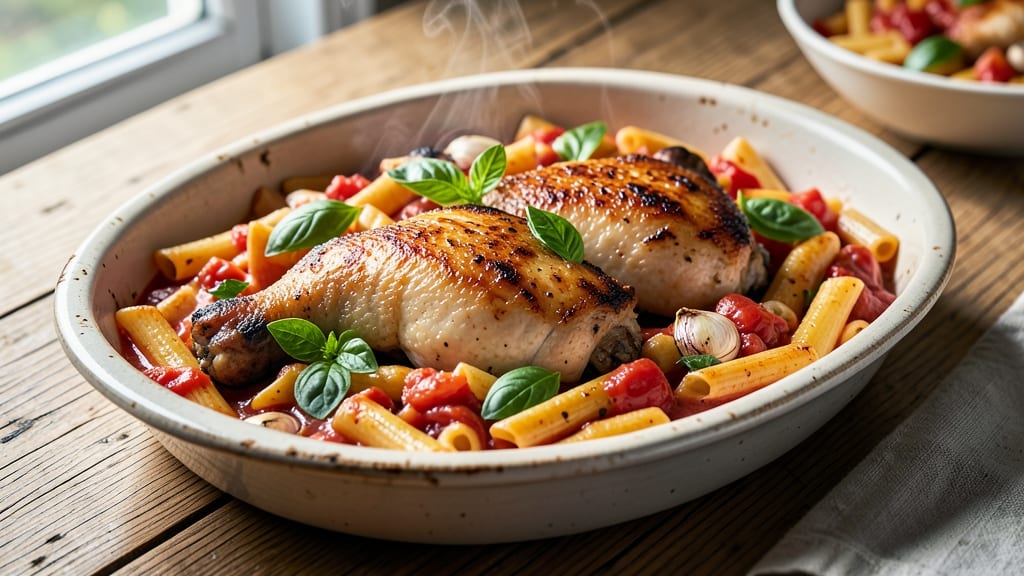
This baked chicken rigatoni recipe transforms a simple weeknight dinner into a restaurant-worthy masterpiece with minimal effort. The secret lies in combining tender baked chicken with al dente rigatoni and a rich, velvety tomato-herb sauce—all in one pan.
I developed this recipe after years of testing, ensuring every bite delivers perfect texture and bold Italian flavors without the fuss of multiple dishes.
The beauty of this dish is its simplicity: chicken thighs bake until golden and juicy while the pasta cooks in the same pan, absorbing the aromatic sauce.
A blend of fresh basil, garlic, and sun-dried tomatoes elevates the sauce, creating a creamy yet tangy profile that pairs beautifully with the chicken. The result is a dish that’s hearty enough for a family dinner but elegant enough for company.
What sets this recipe apart is the balance of textures—tender chicken, perfectly al dente pasta, and a sauce that’s rich but not heavy. The dish comes together in under 45 minutes, with most of that time spent baking.
Serve it with a side of garlic bread or a simple arugula salad to round out the meal.
Whether you're a seasoned home cook or new to Italian cuisine, this recipe delivers foolproof results. The technique is straightforward, but the flavor is anything but basic. Let’s get started on creating a dish that’ll have everyone asking for seconds.
Ingredients for baked chicken rigatoni
Simple ingredients that deliver restaurant-quality Italian flavors in one pan.
| Ingredient | Amount | Notes |
|---|---|---|
| Chicken Thighs (bone-in, skin-on) 🍗 | 1 ½ lb | Trimmed of excess fat |
| Rigatoni Pasta 🍝 | 12 oz | Uncooked, al dente preferred |
| Canned Crushed Tomatoes 🍅 | 28 oz | San Marzano preferred |
| Heavy Cream 🥛 | ½ cup | Full-fat for creaminess |
| Garlic Cloves 🧄 | 4 cloves | Minced for sauce |
| Fresh Basil Leaves 🌿 | ½ cup | Chopped, stems removed |
| Sun-Dried Tomatoes (oil-packed) 🍅 | ¼ cup | Chopped, drained |
| Extra-Virgin Olive Oil 🫒 | ¼ cup | For roasting chicken |
| Dried Oregano 🍃 | 1 tsp | Italian preferred |
| Kosher Salt 🧂 | 1 ½ tsp | Divided for seasoning |
| Ground Black Pepper 🌶️ | ½ tsp | Freshly ground |
| Parmesan Cheese (grated) 🧀 | ½ cup | Freshly grated |
| All-Purpose Flour 🌾 | 2 tbsp | For thickening sauce |
| Red Wine (optional) 🍷 | ¼ cup | Dry variety preferred |
| Butter (optional) 🧈 | 2 tbsp | For extra richness |
The chicken thighs are the star—bone-in, skin-on for maximum flavor and juiciness. Look for thighs with good marbling at stores like Whole Foods or your local butcher. Rigatoni should be al dente when cooked—test a piece by tasting it before it turns mushy. For the tomatoes, San Marzano cans are worth the investment—they're sweeter and less acidic, which balances the creaminess perfectly. Fresh basil is ideal, but if you're using dried, reduce the amount to one-third of what's listed.
No sun-dried tomatoes? Dried tomatoes in oil work in a pinch, just drain them well. Running short on heavy cream? Half-and-half or coconut cream will still give you that velvety texture, though the flavor will differ slightly. Want to skip the wine? Extra chicken broth works, but the acidity won't be the same. The optional butter and flour are for thickening—if you're making this ahead, you might not need them. For the Parmesan, grate it fresh if you can—pre-grated cheese has anti-caking agents that make the sauce grainy.
Chicken thighs keep best in the fridge for 3 days if uncooked, or 2 days after baking. Pasta stays fresh for 2 weeks in a cool, dry place, but once cooked, it's best used within 3 days. The sauce can be prepped ahead and stored for 4 days—it actually tastes better the next day as the flavors meld. For leftovers, reheat gently on the stove with a splash of water or broth to restore creaminess. This dish freezes beautifully for up to 3 months, though the pasta may get slightly mushy when thawed.
Why You'll Love This Recipe
- One-Pan Magic: I swear by this—just toss everything in one dish, bake, and walk away. No boiling pasta separately, no saucepans to scrub. That crispy skin on the thighs? It renders into pure flavor while the rigatoni soaks it up.
- Creamy-Tomato Bliss: The crushed tomatoes and heavy cream create this velvety, slightly tangy sauce that clings to the pasta like it’s been best friends forever. Honestly, the garlic and tomatoes alone make this worth repeating—add the cream, and it’s dangerously good.
- Weeknight Workhorse: Between us, this is my go-to when I need to feed a crowd or just myself after a long day. It’s hearty enough for a Sunday dinner but unfussy enough for a Tuesday. My daughter even picks out the rigatoni at the store now—she knows it’s her favorite.
- Budget-Friendly Feast: Bone-in, skin-on thighs stretch for miles, and canned tomatoes keep costs low without sacrificing taste. Leftovers? Even better. The sauce thickens up nicely, so reheating is a breeze—just toss in a splash of water if it’s too dry. (Yes, even on a Tuesday night.)
Step-by-step instructions for baked chicken rigatoni with creamy tomato sauce
This one-pan method delivers tender chicken, perfectly al dente pasta, and a velvety tomato-herb sauce every time.
Season and Roast the Chicken Thighs
Preheat your oven to 425°F. Pat the 1.5 lb chicken thighs dry with paper towels and place them skin-side up on a rimmed baking sheet. This drying step is crucial—it ensures crispy skin and even cooking.
Season both sides generously with ¾ tsp kosher salt and ¼ tsp ground black pepper, then rub with 1 tbsp extra-virgin olive oil. Roast for 25-30 minutes until the skin is golden brown and crispy, and the internal temperature reaches 165°F. The thighs should release easily from the bone when gently prodded with a fork.
Prepare the Tomato-Herb Sauce Base
While the chicken roasts, heat 1 tbsp extra-virgin olive oil in a large Dutch oven over medium heat. Add the 4 minced garlic cloves and 0.25 cup chopped sun-dried tomatoes and sauté for 1-2 minutes until fragrant but not browned.
Pour in the 28 oz canned crushed tomatoes and stir in the 1 tsp dried oregano. Bring to a gentle simmer, then reduce heat to medium-low and let it cook uncovered for 10 minutes to deepen the flavors. The sauce should thicken slightly but remain loose enough to coat the back of a spoon.
Cook the Rigatoni in the Sauce
Add the 12 oz rigatoni pasta to the simmering sauce along with 1 cup hot water (or pasta water if available). Stir gently to submerge the pasta. Cover and cook for 12-14 minutes until the pasta is al dente—it should have a slight bite but be tender throughout.
If the sauce looks too thick, add ¼ cup hot water to loosen it. The pasta should be swimming in a light, flavorful sauce by the time it's done. Taste and adjust seasoning with additional kosher salt and black pepper if needed.
Combine and Finish with Cream and Herbs
Transfer the roasted chicken thighs to the Dutch oven with the pasta and sauce. Using two forks, shred the chicken into bite-sized pieces, discarding any bones. Stir the chicken into the pasta mixture.
Reduce heat to low and stir in the 0.5 cup heavy cream, 0.5 cup chopped fresh basil leaves, and 0.5 cup grated parmesan cheese. If using, add the 0.25 cup red wine and 2 tbsp butter for extra richness. Simmer gently for 3-4 minutes until the sauce thickens to a creamy consistency and the flavors meld together.
Thicken and Serve Immediately
In a small bowl, whisk together the 2 tbsp all-purpose flour with ¼ cup cold water to make a slurry. Slowly stir this into the pasta mixture, simmering for another 2-3 minutes until the sauce reaches your desired creaminess. The final sauce should coat the pasta beautifully without being gluey.
Taste and adjust seasoning one final time. Ladle the creamy chicken rigatoni into serving dishes, garnishing each portion with additional chopped fresh basil and a sprinkle of grated parmesan cheese. Serve immediately while the pasta is hot and the sauce is at its peak creaminess.
Pro Tips For Making Baked Chicken Rigatoni
- CRISP THE SKIN FIRST: Pat those bone-in thighs bone-dry with paper towels before baking, then sear skin-side down in a cold pan over medium-low heat for 8–10 minutes until golden and crackling. I learned this the hard way—skipping the sear means soggy skin later, no matter how much you bake it. The fat renders slowly, so resist the urge to rush.
- SAUTE GARLIC LOW: Cook your garlic in the same pan used for the chicken, but keep the heat under 250°F (120°C) once it hits the pan. Burnt garlic ruins the whole dish, and this sauce needs that mellow, sweet base. Add a splash of pasta water at the end to deglaze—it’s the only way to get every last bit of flavor into the sauce.
- SALT THE PASTA WATER: Boil your rigatoni in generously salted water (like the sea) and reserve 2 cups of that starchy water before draining. The salt carries flavor, and the starch thickens the sauce without heavy cream. I used to skip this, and the sauce always tasted thin and sad—now it clings like it’s supposed to.
- REST THE CHICKEN: Pull the chicken out of the oven when it’s just done (165°F internal temp) and tent it loosely with foil for 10 minutes. The skin stays crisp, the juices redistribute, and you avoid that sad, dry bite. Yes, even if you’re starving—your future self will thank you.
Storing and reheating this dish
Refrigerator Storage
Store your baked chicken rigatoni in an airtight container with a tight-fitting lid for up to 4 days. Let it cool completely before refrigerating to prevent condensation, which can make the pasta soggy.
I like using glass Pyrex containers because they distribute heat evenly when reheating. The sauce will thicken slightly in the fridge, so add a splash of water or broth when reheating. 🥫
Freezer-Friendly Tips
This dish freezes beautifully for up to 3 months—just portion it into freezer-safe containers or heavy-duty ziplock bags. Leave ½-inch headspace to prevent expansion cracks.
For best results, freeze the assembled dish before adding the fresh basil (add it fresh when reheating). Thaw overnight in the fridge for even reheating. ❄️
Stovetop Reheating
My preferred method is stovetop reheating—it preserves texture better than microwaving. Place portions in a skillet over medium-low heat with 2-3 tablespoons of water or broth. Cover and heat for 5-7 minutes, stirring occasionally, until everything is steaming hot. The sauce will regain its creamy consistency beautifully. 🔥
Microwave Method
For quick reheating, cover the dish with a damp paper towel to prevent drying. Heat on 50% power in 1-minute intervals, stirring between each, until reaching 165°F internal temperature.
Add a splash of heavy cream or broth if the sauce looks too thick. This method works best for single servings. ⏳
Oven Refresh
Transform leftovers into a crispy baked dish by spreading them on a baking sheet and broiling for 3-4 minutes at 400°F. This creates a golden crust while keeping the interior creamy. Perfect for turning reheated pasta into a new meal! Add fresh herbs after baking. 🌟
Sauce Rescue Tips
If your reheated sauce separates, whisk in 1 tablespoon of cold water or heavy cream to restore creaminess. For extra richness, stir in 1 tablespoon of butter or a splash of red wine while reheating. The key is gentle heat—never let it boil, or the sauce may curdle. 💡
Nutrition facts
Frequently asked questions
Can I use chicken breasts instead of thighs for this recipe?
Chicken breasts will work, but thighs are ideal for this baked dish. Thighs stay juicier and develop crispier skin when baked at 425°F. If using breasts, brining them for 30 minutes first helps retain moisture, and reduce baking time to 20-25 minutes since they cook faster.
How do I adjust this recipe for a creamy vs. lighter sauce?
For a lighter sauce, reduce the heavy cream to ¼ cup and add ½ cup chicken broth instead. For extra richness, increase cream to ¾ cup and add 1 tbsp butter. The flour slurry still works—just adjust based on your desired consistency.
What's the best way to make this dish ahead of time?
Prepare the sauce and roast the chicken 1 day ahead, then refrigerate separately. On serving day, cook the rigatoni fresh, combine everything, and reheat gently. The sauce actually tastes better the next day as flavors meld—just add a splash of water or cream when reheating.
Can I substitute rigatoni with another pasta shape?
Yes! Penne or fettuccine work well, but rigatoni's ridges hold the creamy sauce beautifully. For a lighter dish, try farfalle or rotini. Just reduce cooking time by 1-2 minutes since smaller shapes cook faster.
Why did my sauce turn grainy after reheating?
This usually happens when the sauce separates or cools too quickly. To fix it, whisk in 1 tbsp cold water or heavy cream while reheating. For prevention, always reheat on low heat and stir constantly—never let it boil.