
Soups & Stews
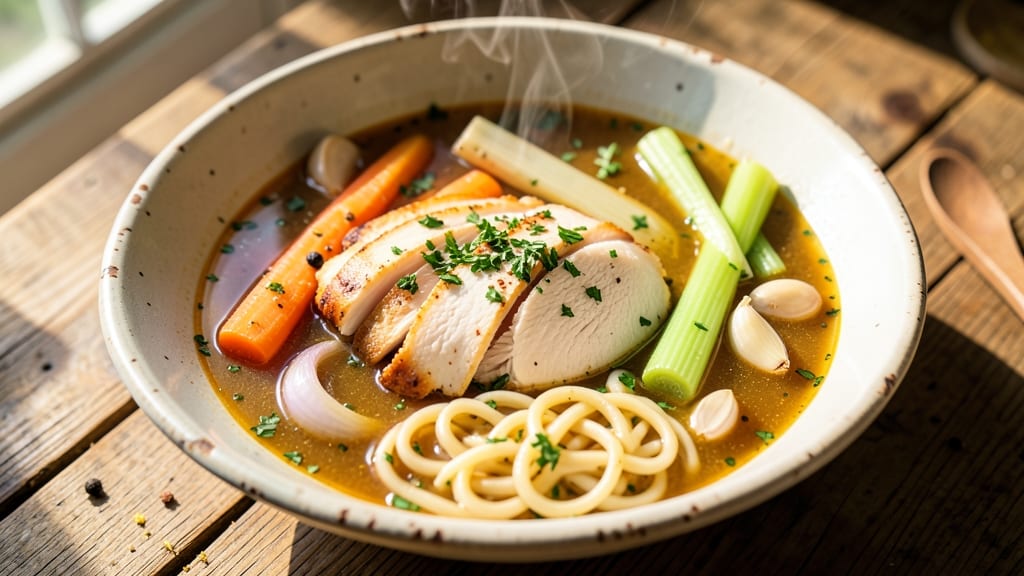
This Babish-style chicken noodle soup recipe delivers the kind of comforting, hearty broth that warms you from the inside out—exactly like your grandmother used to make. 💛 The secret lies in slow-simmered chicken, aromatic vegetables, and perfectly tender noodles, all coming together in one pot for a meal that feels like a hug on a chilly day.
What sets this recipe apart is the rich, clarified broth that develops deep flavor through gentle simmering. We start with a well-seasoned chicken base, then build layers of taste with onions, carrots, celery, and herbs.
The result? A soup that's restaurant-quality but simple enough to make at home, with room to customize based on what you have on hand.
By the time you're done, you'll have a steaming bowl of golden broth filled with tender chicken, soft vegetables, and perfectly cooked noodles. The aroma alone will have everyone gathering around the table, and the first spoonful delivers that perfect balance of savory, herbal, and comforting flavors.
This soup is versatile enough for weeknight dinners or when you're feeling under the weather—it's the kind of meal that tastes even better the next day. Let's get started on creating your own pot of homestyle healing.
Ingredients for babish chicken noodle soup
A few simple ingredients transform into restaurant-quality soup that tastes like home.
| Ingredient | Amount | Notes |
|---|---|---|
| Whole Chicken 🍗 | 3 lb | Bone-in, skin-on preferred |
| Yellow Onion 🧅 | 1 whole | Large, roughly chopped |
| Carrots 🥕 | 4 medium | Peeled and cut into chunks |
| Celery Stalks 🧅 | 4 whole | Trimmed and cut into pieces |
| Garlic Cloves 🧄 | 4 cloves | Peeled and smashed |
| Egg Noodles 🍜 | 8 oz | Medium width preferred |
| Dried Parsley 🌿 | 1 tbsp | Or 2 tbsp fresh chopped |
| Bay Leaves 🍃 | 2 whole | Fresh preferred |
| Salt 🧂 | 1 ½ tsp | Kosher or sea salt |
| Black Peppercorns 🌶️ | ½ tsp | Freshly cracked |
| Chicken Bouillon Cube 🍲 | 1 whole | Optional for extra depth |
| Fresh Thyme 🌿 | 1 tbsp | Leaves only, chopped |
| Olive Oil 🫒 | 2 tbsp | For initial searing |
| Fresh Dill 🌿 | ¼ cup | Chopped, for garnish |
The chicken is the heart of this soup—bone-in, skin-on pieces give you that rich, clarified broth. Look for a whole chicken around 3 pounds at Costco or your local butcher for the best flavor. If you're using pre-cut pieces, bone-in thighs and drumsticks work perfectly. The aromatics—onion, celery, and carrots—are called the 'holy trinity' for a reason. Buy them fresh (not pre-cut) and chop them yourself for better flavor. The carrots should be firm and bright orange, celery crisp, and onions dry but not wilted. I always grab a bunch of fresh thyme and parsley at Trader Joe's—they're usually cheaper than the individual stems at the grocery store.
No fresh herbs? Dried works at one-third the amount, but fresh is ideal. Running low on carrots? Sweet potatoes or parsnips add a nice twist. The bouillon cube is optional but adds that extra depth—Knorr or Maggi are reliable brands. For the noodles, egg noodles are traditional, but any pasta works. If you're making this ahead, cook the noodles separately and add them just before serving to keep them from getting mushy. The olive oil is just for initial searing—don't skimp on this step. It builds the flavor base for the whole soup.
This soup tastes even better the next day—make a double batch and freeze half. Store leftovers in the fridge for 4-5 days or freeze for up to 3 months. I always keep a pot of this in the freezer for those nights when I'm too tired to cook. To reheat, just warm on the stove with a splash of water or broth. The broth thickens as it cools, so adding a little liquid helps. Garnish with fresh dill or parsley right before serving—it makes all the difference.
Why You'll Love This Recipe
- One-Pot Magic: I swear by this recipe when I’m too tired to dirty more than one pot. Toss the whole chicken, chopped veggies, and broth in one container—no measuring cups, no extra bowls, just dump-and-go. The chicken practically falls off the bone while the carrots and celery soften into that perfect, melt-in-your-mouth texture.
- Garlic Bomb Flavor: Between us, this isn’t your basic soup. The roasted garlic cloves—yes, you’re supposed to roast them first—add a deep, sweet richness that makes every spoonful feel like a hug. And that crispy chicken skin? I’ll fight anyone who says you can’t get it in a soup.
- Leftovers That Don’t Suck: Honestly, I make this on Sundays just for the leftovers. The broth thickens overnight into something even better—deep, savory, and packed with flavor. Freeze half for when you’re too wiped to cook, and it’ll taste like you slaved over it. (Spoiler: You didn’t.)
- Budget-Friendly Crowd-Pleaser: You’re getting a whole chicken for the price of two breasts, and the veggies stretch this into four or five servings without breaking the bank. My college roommates and I lived on this—cheap, filling, and no one ever complained. Even picky eaters ask for seconds.
Step-by-step instructions for homestyle chicken noodle soup
Here's how to build a comforting pot of soup that tastes like grandma's—rich, aromatic, and packed with hearty flavor.
🔥 Step 1: Sear the Chicken for Maximum Flavor
Heat a large Dutch oven over medium-high heat and add the 2 tablespoons olive oil. Once shimmering, place the 3 lb whole chicken breast-side down and let it sear undisturbed for 5-6 minutes until the skin turns golden brown. Flip the chicken and sear the other side for another 5 minutes.
This step is non-negotiable—searing creates a deep, nutty flavor that infuses the broth. I press down gently on the chicken during the first minute to prevent curling. Once browned, remove the chicken and set it aside on a plate, leaving all that beautiful browned fat in the pot.
👨🍳 Step 2: Build the Aromatic Vegetable Base
In the same Dutch oven, add the roughly chopped yellow onion, chopped carrots, and celery stalks. Cook for 5-7 minutes, stirring occasionally, until the vegetables soften and the onion becomes translucent. Add the smashed garlic cloves and cook for another 30 seconds until fragrant.
Here's the thing—don't rush this step. The vegetables need time to develop their sweetness and release their natural flavors. If they start to brown too quickly, reduce the heat slightly. The goal is to create a flavorful foundation that will simmer into the broth.
🍳 Step 3: Simmer the Broth with Herbs and Seasonings
Pour in 8 cups water (or enough to cover the chicken by about 1 inch) and add the chicken bouillon cube, 1.5 teaspoons salt, 0.5 teaspoon black peppercorns, 2 whole bay leaves, and 1 tablespoon chopped fresh thyme. Bring to a boil, then reduce heat to medium-low and skim off any foam that rises to the surface.
Return the chicken to the pot, breast-side up. Cover and simmer gently for 45-50 minutes until the chicken is cooked through and the meat is fork-tender. I check for doneness by inserting a meat thermometer into the thickest part of the thigh—it should read 165°F. The broth should now be rich and flavorful, with the aroma of herbs filling your kitchen.
🥘 Step 4: Shred the Chicken and Add Noodles
Remove the chicken from the pot and let it rest for 5 minutes before shredding the meat with two forks. Discard the skin and bones, then return the shredded chicken to the broth. Add the 8 ounces egg noodles and the 1 tablespoon dried parsley. Stir gently to combine, then return the pot to a simmer.
Cook the noodles for 8-10 minutes or until they're al dente and floating to the surface. The broth should now be thick enough to coat a spoon. If it's too thin, simmer uncovered for another 5 minutes to reduce slightly. Taste and adjust the seasoning with more salt or pepper if needed.
🍽️ Step 5: Finish and Serve with Fresh Herbs
Remove the pot from heat and stir in the 0.25 cup chopped fresh dill. Ladle the soup into bowls, making sure each serving gets a generous portion of chicken and noodles. The soup should be steaming hot, with a rich, golden broth that's infused with the flavors of the herbs and vegetables.
Garnish each bowl with a sprinkle of fresh dill and serve immediately. The aroma alone will make your kitchen feel like a warm hug. This soup is best enjoyed fresh, while the noodles are tender and the broth is steaming. Leftovers keep well in the refrigerator for up to 3 days, but they won't taste quite as good as they do fresh from the pot.
Pro Tips For Making Babish Chicken Noodle Soup
- CRISP THE SKIN FIRST: Before roasting the whole chicken, pat it dry and score the skin in a crosshatch pattern—this lets the fat render out and creates a golden, crispy crust that adds depth to the broth. I used to skip this, and the soup always tasted like it needed more richness.
- CHOP VEGETABLES UNIFORM: Cut carrots and celery into ½-inch pieces, and slice onions into ¼-inch half-moons—consistent sizing means even cooking and no mushy bits lurking in the broth. My first few batches had half-cooked celery stalks because I was lazy about prep.
- SKIP THE BOILING: After removing the chicken from the pot, let the broth cool for 10 minutes before straining—this prevents the noodles from turning to mush when added later. I learned this after serving soup with overcooked, gummy noodles.
- USE COLD NOODLES: Always add cold egg noodles to the simmering broth—they’ll cook faster and absorb flavor more evenly than warm or room-temperature noodles. I was skeptical until I tried it, and now I never go back.
Dietary considerations for these flavors
Gluten-Free Swaps
For a gluten-free version, replace the egg noodles with gluten-free pasta like Barilla GF or De Cecco GF. These brands mimic the texture of traditional noodles while keeping the soup hearty.
I’ve also had great results with rice noodles—just reduce cook time by 2-3 minutes since they soften faster. 💛
If you're avoiding gluten entirely, check that your bouillon cube is certified gluten-free (like Imagine or Pacific Foods). The broth itself is naturally gluten-free, so the only adjustments needed are the noodles and seasoning base.
Low-Carb Options
Skip the noodles entirely and bulk up the soup with shredded cabbage or zucchini noodles. Add 1 cup chopped cabbage or 2 medium zucchinis (spiralized) during the final 5 minutes of cooking.
For extra protein, stir in ½ cup cooked quinoa or ½ cup chickpeas—they soak up the broth beautifully.
To thicken the broth without carbs, blend ½ cup of the cooked vegetables (carrots, celery, onion) with ½ cup broth until smooth, then stir back in. This creates a velvety texture without relying on noodles.
Dairy-Free Adjustments
This soup is naturally dairy-free, but if you're using a dairy-free bouillon cube (like Better Than Bouillon), double-check the label. The recipe already avoids cheese or cream, so no other changes are needed.
For extra richness, stir in 1 tablespoon nutritional yeast at the end—it adds a cheesy, umami depth without dairy. 🌱
Vegetarian Adaptations
Replace the chicken with mushrooms or tofu for a vegetarian version. Sauté 1 lb cremini mushrooms (or 1 block extra-firm tofu, pressed and cubed) until golden, then proceed with the recipe.
Boost umami with 1 teaspoon soy sauce or 1 tablespoon miso paste in the broth. For extra heartiness, add 1 cup lentils (cooked separately) or 1 can white beans (drained).
To mimic the chicken’s texture, shred the mushrooms or tofu and return them to the broth. A splash of lemon juice brightens the flavors, balancing the earthiness of the vegetables.
Allergen-Friendly Tips
For egg allergies, use gluten-free, egg-free noodles like Brown Rice Pasta or corn pasta. If you're avoiding celery, swap it for leeks or extra carrots—the flavor profile stays rich.
For onion sensitivities, use shallots (milder) or green onions (add at the end). Always check labels on bouillon cubes and dried herbs for hidden allergens.
If someone in your household has nightshade allergies, omit the black peppercorns and use white pepper instead. The soup remains just as comforting without these ingredients.
Nutrition facts
Frequently asked questions
Can I use chicken thighs instead of a whole chicken?
Bone-in, skin-on chicken thighs work perfectly and add even more flavor to the broth. Use about 2.5 lbs of thighs (6-8 pieces) for a similar yield. The skin will render fat for a richer broth, and the meat stays juicy during simmering. Just increase simmering time to 50-55 minutes to ensure thorough cooking.
Why does my broth look cloudy instead of clear?
Cloudy broth is normal during initial simmering, but for a clearer result, skim off any foam that rises to the surface during the first 10 minutes of simmering. If you want restaurant-style clarity, strain the broth through a fine-mesh sieve after removing the chicken, then return it to the pot. The vegetables can be added back if you prefer texture. Patience is key—clarified broth develops through gentle, prolonged simmering.
How can I make this soup ahead of time?
This soup tastes even better the next day! Prepare it completely (including noodles) and store it in the fridge for up to 4-5 days. For freezing, cook the broth and chicken, then cool completely before transferring to airtight containers. Freeze the broth separately from the noodles—reheat the broth first, then add cooked noodles when serving. The broth thickens as it cools, so add a splash of water when reheating if needed.
What if I don't have fresh herbs?
No problem! Use dried herbs at one-third the amount (e.g., 1/3 tbsp dried thyme instead of 1 tbsp fresh). For dried parsley, use 1 tsp instead of 1 tbsp. If you're missing dill entirely, try 1 tsp dried oregano or 1/2 tsp dried basil—they add different but complementary flavors. The key is balancing the herbal notes, so adjust to your taste.
Can I make this soup in an Instant Pot?
Yes! Sauté the chicken and vegetables as directed, then add all liquids and seasonings. Cook on high pressure for 20 minutes, then quick-release the pressure. Shred the chicken, return it to the pot, and add noodles cooked separately. The Instant Pot reduces cooking time but may yield slightly less clear broth. For extra richness, add 1/2 cup chicken stock after pressure cooking to compensate for liquid loss.