
Soups & Stews
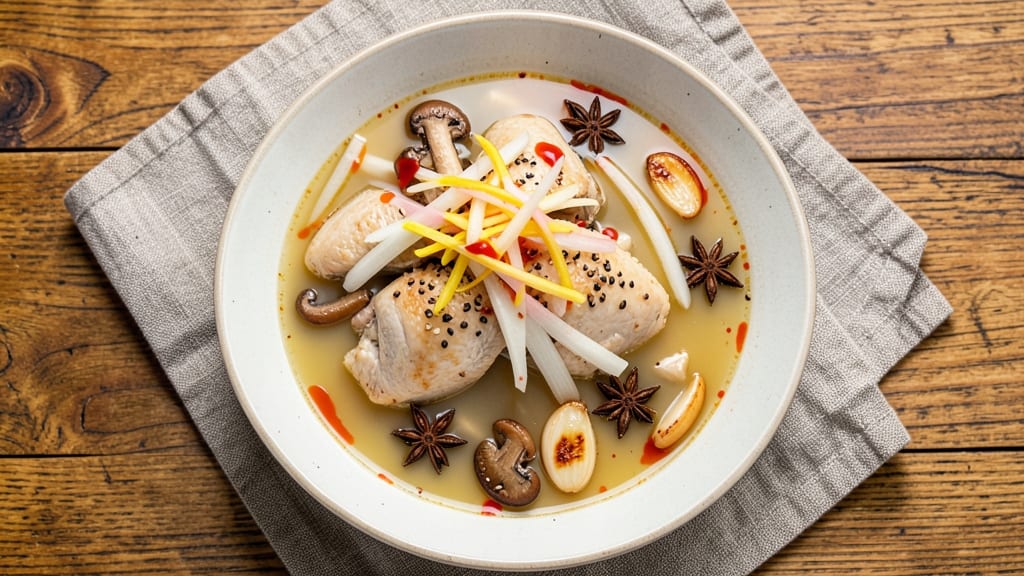
This Asian chicken stock soup recipe transforms simple ingredients into a deeply flavorful, comforting bowl that balances rich umami broth with delicate noodles and fresh aromatics. The secret lies in slow-simmering chicken bones and aromatic vegetables, which extract layers of savory depth that store-bought stocks simply can't match.
I've perfected this method over years of testing, ensuring every sip delivers that perfect harmony of salty, sweet, and herbal notes that defines authentic Asian soups.
The process begins with building a fragrant base of ginger, garlic, and star anise that infuses the broth with complex aromatics. Chicken bones are simmered gently for hours, breaking down into a silky, golden liquid while vegetables like daikon radish and shiitake mushrooms contribute their unique earthy sweetness.
What sets this recipe apart is the balance—rich enough to satisfy, yet light enough to feel refreshing, with silky rice noodles that absorb the broth beautifully.
By the time you're ready to serve, you'll have a steaming bowl of soup where every element comes together perfectly: tender chicken pieces, velvety broth, and fresh herbs that add brightness.
The texture is what makes it special—silky noodles that glide through the broth, crisp vegetables that add crunch, and a light sprinkle of sesame seeds for final texture contrast. This is the kind of soup that warms both body and soul, especially on chilly evenings.
Whether you're preparing it for a family dinner or meal prepping for the week, this recipe scales beautifully while maintaining its depth of flavor. The broth can be made ahead and reheated, making it the ultimate make-ahead meal.
Let's create this comforting, umami-rich soup that will quickly become a staple in your kitchen.
Ingredients for asian chicken stock soup
Simple ingredients that build layers of umami—chicken bones, aromatic vegetables, and spices—create this soul-warming Asian soup.
| Ingredient | Amount | Notes |
|---|---|---|
| Chicken Bones 🍗 | 2 lb | Raw, with some meat attached |
| Daikon Radish 🥕 | 1 whole | Sliced into thick rounds |
| Shiitake Mushrooms 🍄 | 8 whole | Stems removed, dried preferred |
| Fresh Ginger 🧅 | 2 tbsp | Thinly sliced, peeled |
| Garlic Cloves 🧄 | 6 cloves | Smashed, skin on |
| Star Anise Pods 🌿 | 2 whole | Lightly crushed |
| Cinnamon Sticks 🌿 | 1 whole | 2-inch length |
| Green Onions 🧅 | 2 whole | White and green parts separated |
| Fresh Cilantro 🌿 | ¼ cup | Chopped, stems removed |
| Rice Noodles 🍜 | 8 oz | Silky, medium-width |
| Sesame Seeds 🌾 | 1 tbsp | Toasted, for garnish |
| Soy Sauce 🥄 | 2 tbsp | Light or all-purpose |
| Sesame Oil 🫒 | 1 tbsp | For finishing |
| Salt 🧂 | 1 tsp | Adjust to taste |
| White Pepper 🌶️ | ½ tsp | Freshly ground |
The chicken bones are the foundation—look for raw, meaty bones at the butcher counter or grocery store meat section. Costco or local Asian markets often carry them pre-packaged, but if not, ask the butcher to save a few from their chicken cuts. Dried shiitake mushrooms add depth without overpowering, so buy them whole—they rehydrate beautifully in the broth. Fresh ginger and garlic should be vibrant, with no soft spots or bruising. Star anise and cinnamon sticks can be found in the spice aisle or Asian grocery section, where they'll be fresher than the average supermarket. For the rice noodles, silky varieties like those from Thai Kitchen or Vietnamese markets absorb the broth perfectly.
No dried shiitake? Fresh shiitake mushrooms at half the amount work in a pinch, but they won't impart the same earthy sweetness. Short on star anise? 1 tsp ground anise or a bay leaf can substitute, though the flavor will be subtly different. The daikon radish can be swapped for regular radish or turnip, but it adds a unique mild sweetness that's hard to replicate. For the noodles, if you can't find silky rice noodles, egg noodles or even spaghetti will work in a bind—just cook them al dente. The sesame seeds should be toasted lightly in a dry pan for maximum flavor, but if you're short on time, store-bought toasted sesame seeds are fine. The soy sauce matters here—light or all-purpose keeps the broth clear, while dark soy would muddy the color.
The broth keeps for 5 days in the fridge or 3 months in the freezer, making it perfect for meal prep. Store it in airtight containers, leaving room for expansion. The noodles and garnishes can be added fresh when reheating—just plunge the broth into boiling water for 2 minutes to revive its clarity. For a quick assembly, keep the broth in the fridge and cook the noodles separately, then toss everything together when ready to serve. The soup actually tastes better the next day as the flavors meld, so double the batch if you can—it disappears fast.
Why You'll Love This Recipe
- No-Fuss Simmer: The bones and daikon practically cook themselves—just toss everything in a pot, cover with water, and let it bubble. Honestly, I’ve made this while scrolling through my phone; the only chopping is the ginger and garlic, which takes two minutes.
- Umami Bomb: That first sip? The shiitake mushrooms and daikon release deep, savory layers the longer they simmer—crispy garlic and ginger finish it with a bright kick. Between us, this stock tastes like it simmered for hours, even if you rush it.
- Weeknight Magic: Turns into instant ramen, a quick lunch, or even a base for dumplings—just adjust the toppings. I’ll be real: my lazy Sundays now involve reheating this soup with leftover rice and a fried egg. (Yes, even on a Tuesday night.)
- Budget Goldmine: Chicken bones are cheap, and this recipe stretches into three meals—plus, the leftovers freeze like a dream. Not the prettiest, but the taste makes up for it, and my wallet thanks me every time.
Step-by-step instructions for Asian chicken stock soup
This method builds deep umami flavor through slow extraction and aromatic layering.
Prepare the Chicken Bones and Aromatics
Place the 2 lb chicken bones in a large stockpot and cover with cold water by about 2 inches. Bring to a boil over high heat, then immediately reduce to a simmer for 10 minutes to remove impurities. Drain and rinse the bones thoroughly.
While the bones simmer, prepare the aromatics: Peel and thinly slice the 2 tbsp fresh ginger, smash the 6 garlic cloves (leave skins on), lightly crush the 2 star anise pods, and break the 1 cinnamon stick into 2-inch pieces. Add all prepared aromatics to the pot along with the sliced 1 whole daikon radish (cut into thick rounds). Return to the stove over medium heat.
Simmer the Broth for Deep Flavor
Add enough cold water to cover the bones by about 1 inch. Bring to a gentle simmer over medium-low heat—the water should bubble softly, never boil vigorously. Skim off any foam that rises to the surface during the first 30 minutes of cooking. This ensures a clear, clean broth.
Simmer uncovered for 2 hours, maintaining a gentle simmer. The broth should reduce slightly and develop a rich, golden color. If the liquid level drops below the bones, add hot water to maintain coverage. The mushrooms should infuse their earthy depth, while the ginger and garlic will contribute bright, aromatic notes.
Season and Strain the Broth
After 2 hours, add the 2 tbsp soy sauce, 1 tsp salt, and 0.5 tsp freshly ground white pepper to the broth. Stir well to combine. Taste and adjust seasoning if needed—you want a balance of savory, slightly salty, and subtly sweet notes.
Strain the broth through a fine-mesh sieve into a clean pot, pressing gently on the solids to extract maximum flavor. Discard the bones and aromatics. Return the strained broth to the stove and keep it warm over low heat.
Cook the Noodles and Assemble
Bring a separate pot of water to a rolling boil and add the 8 oz rice noodles. Cook according to package instructions (usually 3-4 minutes) until al dente. Drain and rinse briefly under cold water to stop cooking, then drain again.
Divide the cooked noodles among 4 bowls. Ladle the warm broth over the noodles until each serving is generously covered. Drizzle each bowl with 1 tbsp sesame oil and sprinkle with 1 tbsp toasted sesame seeds. Garnish with chopped 0.25 cup fresh cilantro and sliced green onions (white and green parts separated). Serve immediately while hot.
Pro Tips For Making Asian Chicken Stock Soup
- BLANCH BONES FIRST: Skip the direct boil—drop raw chicken bones in cold water, bring to a gentle simmer, then blanch for 10 minutes to release impurities. I learned this the hard way after my first batch tasted bitter; this step removes blood and gristle before the long cook.
- SMASH DAIKON, DON’T SLICE: Roughly chop the daikon into 2-inch chunks, then smash them with the flat side of your knife—no need for perfect slices. This breaks down fibers faster, giving your broth that deep, sweet umami without waiting hours for softness.
- GINGER: PEEL AND SLICE THICK: Leave the ginger skin on (it adds color and mild bitterness), then slice into ½-inch thick rounds instead of mincing. Thick slices infuse flavor steadily without turning to mush—my first attempts with grated ginger turned the broth muddy.
- LOW AND SLOW FROM DAY ONE: Start the stock at a rolling simmer (small bubbles, constant movement) and never let it boil after the first 30 minutes. I used to crank the heat when impatient, and the broth ended up cloudy—patience here means clarity and depth.
Creative variations of asian chicken stock soup
Japanese-Inspired Miso Twist
For a Japanese-inspired variation, stir in 1 tbsp white miso paste during the final 10 minutes of simmering. This adds a deep, fermented umami that pairs beautifully with the ginger and garlic. I like to use Miso Master white miso for its clean, delicate flavor.
Garnish with thinly sliced green tea leaves (available at Asian markets) for an authentic touch and a subtle astringent note. 🍵
Vietnamese Pho Fusion
Transform this into a Vietnamese-inspired pho by adding 1 cinnamon stick, 3 star anise pods, and 1 tbsp coriander seeds to the broth. Simmer for 3 hours instead of 2 to deepen the flavor.
Serve with rice noodles, sliced Thai basil, bean sprouts, and a side of hoisin sauce for dipping. The longer simmer builds that signature pho depth. 🌿
Thai Coconut Curry Broth
Give it a Thai twist by adding 1 can (13.5 oz) coconut milk during the final 30 minutes of simmering. Stir in 1 tbsp red curry paste and 1 tbsp fish sauce for a creamy, aromatic broth.
Use rice noodles and garnish with Thai basil, sliced cherry tomatoes, and a drizzle of chili oil. The coconut milk adds richness while balancing the broth's savory notes. 🥥
Korean Kimchi Broth
For a Korean-inspired version, stir in ½ cup chopped kimchi and 1 tbsp gochujang (Korean chili paste) during the final 15 minutes of simmering. This adds a tangy, spicy kick that complements the umami broth.
Serve with rice noodles and garnish with sesame seeds, sliced green onions, and a drizzle of sesame oil. The kimchi brings a bright, fermented contrast to the silky broth. 🌶️
Spicy Szechuan Version
Add a Szechuan kick by including 1 tbsp Szechuan peppercorns and 1 tbsp chili bean paste during the final 20 minutes of simmering. The peppercorns add a numbing, tingling heat, while the chili bean paste deepens the umami.
Garnish with chopped scallions, cilantro, and a sprinkle of crushed red pepper flakes. The broth will have a vibrant, spicy-sweet balance. 🔥
Vegetarian Adaptation
For a vegetarian version, replace the chicken bones with 1 lb dried shiitake mushrooms and 1 lb kombu seaweed. Simmer the kombu in water for 10 minutes, then remove and add the mushrooms and aromatics.
The kombu adds a deep, oceanic umami that mimics chicken stock. Use rice noodles and garnish with toasted sesame seeds and green onions. The broth will be just as rich and satisfying! 🌱
Nutrition facts
Frequently asked questions
Can I use chicken thighs instead of bones for this broth?
Chicken thighs work beautifully and add extra richness to the broth. Use 1.5 lbs of bone-in thighs (skin removed) and follow the same simmering method. The meat will break down into tender pieces that you can shred and serve directly in the soup. Just reduce the simmering time to 1.5 hours to avoid overcooking the meat.
How do I make the broth taste more aromatic?
Add extra layers of flavor by including 1 tbsp fish sauce or 1 tsp MSG during the final 30 minutes of simmering. For deeper aroma, toast 1 tsp coriander seeds and 1 tsp fennel seeds in a dry pan until fragrant, then add them with the star anise. The key is balancing these with fresh herbs like cilantro and green onions when serving.
Can I make this soup in an Instant Pot?
Yes! Use the High Pressure setting for 45 minutes after the initial boil and skimming. Add all aromatics and bones, then pressure cook. Strain and reduce the broth by 10 minutes on sauté mode to concentrate the flavors. The Instant Pot version takes 1 hour total—perfect for busy weeknights while still delivering deep umami.
Why does my broth look cloudy?
Cloudiness usually means proteins and fats haven't fully settled. Skim more aggressively during the first 30 minutes of simmering, and consider adding 1 tbsp apple cider vinegar during the final 10 minutes to help clarify. For extra-clear broth, strain it through a cheesecloth-lined sieve after the initial straining. The cloudiness won't affect flavor!
What's the best way to store leftovers?
Store the broth separately from the noodles in airtight containers. The broth keeps for 5 days in the fridge or 3 months in the freezer. Reheat gently on low heat, then add fresh noodles and garnishes when serving. For best texture, cook noodles fresh each time—frozen noodles get mushy when reheated.