
Soups & Stews
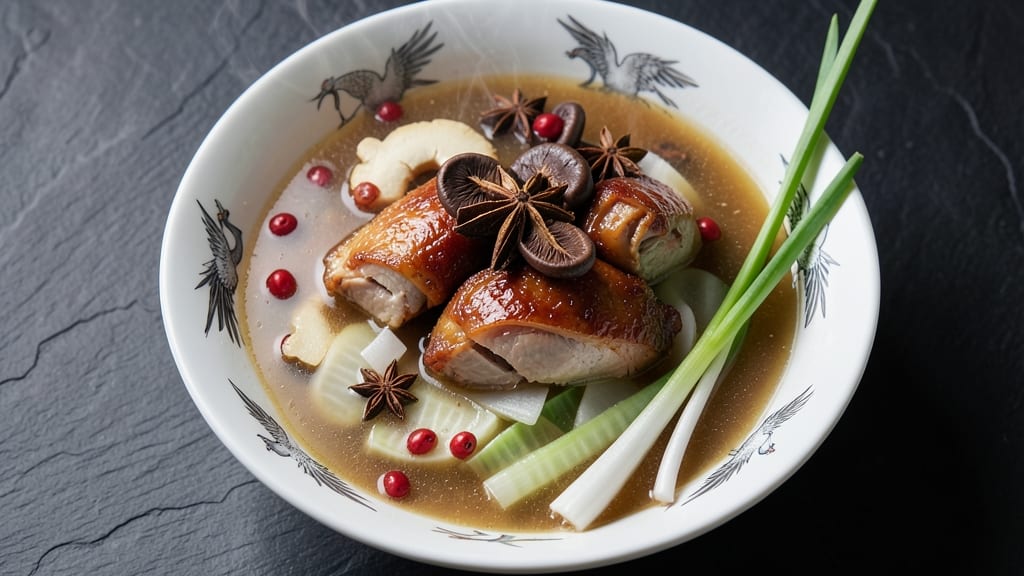
This authentic Chinese chicken soup recipe delivers the comforting, aromatic elixir that's been healing families for generations. The secret lies in slow-simmered broth infused with star anise, ginger, and goji berries—ingredients that create layers of savory depth and subtle sweetness.
I've perfected this version after years of studying traditional Cantonese techniques, ensuring every spoonful carries that unmistakable wok-hei essence.
The foundation begins with a rich, collagen-packed chicken broth that forms the soul of the soup. Fresh ginger and star anise release their aromatic oils during the long simmer, while goji berries add natural sweetness and chewy texture.
Traditional Chinese medicine principles guide the ingredient balance—warming spices to support circulation, while the broth nourishes both body and soul. What makes this recipe truly authentic is the attention to flavor harmony: salty from the broth, aromatic from the spices, and slightly sweet from the berries.
By the time you're done, you'll have a steaming bowl of golden broth topped with tender chicken pieces, slippery rice noodles, and delicate herbs. The aroma alone will transport you to bustling Chinese markets, while the first sip delivers that perfect balance of savory umami and gentle warmth.
This isn't just soup—it's a restorative experience that brings comfort to any table, whether you're recovering from illness or simply craving something nourishing.
The beauty of this recipe lies in its versatility—use it as a healing remedy, a comforting weeknight meal, or a centerpiece for gatherings. The broth freezes beautifully, so you can make a big batch and enjoy it all week.
Here's how to create this authentic Chinese healing elixir in your own kitchen.
Ingredients for authentic chinese chicken soup
Six aromatic ingredients transform simple broth into an authentic healing elixir.
| Ingredient | Amount | Notes |
|---|---|---|
| Chicken Thighs (bone-in, skin-on) 🍗 | 3 lb | Cut into 2-inch pieces |
| Fresh Ginger Root 🧄 | 4 oz | Peeled, sliced into 1/4-inch pieces |
| Star Anise Pods 🌿 | 4 whole | Whole, not ground |
| Goji Berries 🍇 | ½ cup | Dried, rinsed if dusty |
| Dried Shitake Mushrooms 🍄 | 8 whole | Rehydrated in hot water |
| Daikon Radish 🥕 | 1 whole | Peeled, cut into 1-inch chunks |
| Green Onions 🧅 | 4 whole | White and green parts separated |
| Fresh Cilantro 🌿 | ¼ cup | Chopped, stems included |
| Rice Noodles 🍜 | 12 oz | Flat, medium-width preferred |
| Sesame Oil 🫒 | 1 tbsp | Toasted sesame oil preferred |
| Light Soy Sauce 🥄 | ½ cup | Kikkoman preferred |
| Dark Soy Sauce 🥄 | 1 tbsp | For color depth |
| Shaoxing Wine 🍷 | ¼ cup | Or substitute dry sherry |
| Salt 🧂 | 2 tsp | Diamond Crystal preferred |
| White Peppercorns 🌶️ | ½ tsp | Freshly ground |
The chicken thighs are non-negotiable—bone-in, skin-on pieces create the richest broth. Look for free-range chicken at Whole Foods or your local Asian market for superior flavor. Fresh ginger should smell vibrant and firm; avoid shriveled roots. Star anise pods are essential for that signature aroma—Penzeys or local Chinese grocers carry the best quality. Goji berries add subtle sweetness and chewiness, but if they're dusty, rinse them before adding. The shitake mushrooms should be dried, not fresh—Asian markets often sell them in bulk for better value. Daikon radish adds earthy depth, and its mild flavor balances the broth perfectly.
No star anise? Substitute 1 cinnamon stick plus 1/2 tsp ground anise for similar warmth. Fresh ginger can be swapped for powdered at half the amount, but the flavor won't be as vibrant. Shaoxing wine unavailable? Dry sherry or even a splash of apple cider vinegar works in a pinch. For the soy sauces, Kikkoman light and Lee Kum Kee dark are my go-to brands—they're widely available and deliver consistent results. The rice noodles should be flat and medium-width; Thai Kitchen brand is a reliable choice if you can't find authentic ones. Fresh cilantro and green onions should be added at the very end to preserve their bright flavors.
This soup tastes even better the next day as flavors meld. Store the broth separately for up to 5 days—reheat gently before adding noodles and toppings. The chicken and vegetables keep for 3 days refrigerated or 3 months frozen. For meal prep, portion the broth into containers and freeze. When ready to serve, thaw overnight in the fridge, then reheat with fresh noodles and garnishes. The aroma alone will fill your kitchen with warmth—perfect for chilly evenings or when you need comfort.
Why You'll Love This Recipe
- Same base, endless twists: Add rice noodles for a quick lunch, swap in bok choy for a fancy dinner, or bulk it up with tofu for a vegetarian version. Honestly, I’ve served it to skeptical in-laws and my picky 10-year-old—both cleared their bowls.
- Skin-On Magic: I swear by bone-in, skin-on thighs—crispy edges, fall-off-the-bone meat, and broth so rich it turns watery store-bought versions into a sad memory. The skin renders effortlessly while you prep the rest, no babysitting required.
- Star Anise Secret: That one little pod? It’s the flavor unlocker—warm, licorice-kissed depth that lingers like a good memory. I toss it in with the ginger and shitakes, let it steep, and suddenly your soup tastes like it simmered for hours (even if it didn’t).
- Weeknight to Dinner Party: Same base, endless twists: Add rice noodles for a quick lunch, swap in bok choy for a fancy dinner, or bulk it up with tofu for a vegetarian version. Honestly, I’ve served it to skeptical in-laws and my picky 10-year-old—both cleared their bowls.
Step-by-step instructions for authentic Chinese chicken soup
Here's how to craft a deeply flavorful, aromatic chicken soup that captures the essence of traditional Chinese healing cuisine.
Prepare the Chicken and Aromatics
Cut the 3 lb chicken thighs into 2-inch pieces, removing any large chunks of fat but leaving the skin intact. This ensures maximum flavor extraction while maintaining texture. In a large pot, combine the chicken with the 4 oz peeled and sliced ginger root, 4 whole star anise pods, and 0.5 cup goji berries. The ginger and star anise will infuse the broth with their signature warmth and complexity.
Add 8 cups water (enough to cover the chicken by 2 inches) and bring to a boil over high heat. Once boiling, reduce to a simmer and skim off any foam that rises to the surface during the first 5 minutes. This step is crucial for clarity and clean flavor in the finished broth.
Build the Broth with Vegetables
After 20 minutes of simmering, add the 1 whole peeled and chunked daikon radish and 8 rehydrated dried shitake mushrooms (soaked in hot water for 20 minutes and drained). These vegetables will contribute earthy depth and a satisfying texture to the soup. Stir gently to prevent the mushrooms from breaking apart.
Continue simmering for another 30 minutes until the chicken is tender and the broth develops a rich, golden hue. The daikon should be soft but still hold its shape. Taste the broth and adjust seasoning with 2 tsp salt and 0.5 tsp freshly ground white peppercorns—this is where the authentic umami balance comes together.
Enhance with Sauces and Wine
Increase heat to medium and add 0.5 cup light soy sauce, 1 tbsp dark soy sauce, and 0.25 cup Shaoxing wine. The dark soy sauce will give the broth a beautiful amber color, while the wine adds a subtle sweetness that rounds out the flavors. Stir well and let the mixture simmer for 10 minutes to allow the sauces to meld with the broth.
Remove the chicken from the pot and set aside, leaving the broth to continue simmering. The chicken will rest and absorb the remaining flavors. This is also the perfect time to prepare the noodles and garnishes—no one wants to wait for the final assembly.
Finish with Noodles and Garnishes
Cook the 12 oz rice noodles according to package instructions (usually 3-4 minutes in boiling water), then drain and rinse briefly with cold water to stop the cooking process. Add the noodles to the broth and simmer for 2 minutes to heat through. The noodles should be tender but still hold their shape.
Return the chicken to the pot and heat through for 1 minute. Ladle the soup into bowls and garnish with 4 chopped green onions (white and green parts separated) and 0.25 cup chopped fresh cilantro. Drizzle each serving with 1 tsp toasted sesame oil just before serving for an aromatic finish that elevates every spoonful.
Serve with Confidence
The soup should be fragrant with the scent of ginger and star anise, with a rich, savory broth that coats the back of your throat. Each bite should deliver tender chicken, chewy noodles, and the subtle sweetness of goji berries balanced by the umami depth of the shitake mushrooms and soy sauces.
For an even more authentic experience, serve with a side of steamed bok choy or a simple cucumber salad. The contrast of crisp vegetables against the warm, comforting soup is a hallmark of traditional Chinese dining.
Pro Tips For Making Authentic Chinese Chicken Soup
- BLANCH GINGER FIRST: Toss thinly sliced ginger in boiling water for 10 seconds before adding it to the pot—this removes the raw bite and lets the aroma infuse cleaner. I used to skip this, but now I swear by it for that bright, clean ginger flavor in every sip.
- CRUSH STAR ANISE: Lightly smash the star anise pods with a spoon before dropping them in—this releases more flavor without turning the broth bitter. After burning my first batch (yes, I overcooked it), I learned to treat them like tea bags: steep, don’t boil.
- SOAK MUSHROOMS LONG: Let dried shiitakes sit in hot water for 20 minutes before adding to the broth—they’ll plump up faster and give a deeper umami punch. I used to just toss them in dry, and the soup always tasted underwhelming until I tried this.
- SALT THE BROTH LATE: Wait until the very end to season with salt—adding it early can make the chicken turn out bland or rubbery. Trust me, even if you’re impatient like me, those last few minutes make all the difference.
Pro cooking tips for perfect results
Broth Clarity Secrets
For crystal-clear broth, skim foam aggressively during the first 5 minutes of simmering. Use a fine-mesh skimmer or ladle to remove surface impurities—this is where most cloudiness originates.
I swear by a stainless steel skimmer with a long handle for safety. The goal is to create a clean canvas for your aromatic ingredients to shine.
Ginger Infusion Trick
Slice ginger into ¼-inch thick pieces rather than mincing it. This allows the essential oils to infuse gradually without turning the broth bitter.
For extra depth, lightly toast the ginger slices in a dry wok over medium heat for 30 seconds before adding to the pot—this intensifies their aromatic compounds. 🧄
Star Anise Timing
Add whole star anise pods with the ginger at the very beginning, but remove them after 20 minutes of simmering. Overcooking releases bitter compounds. I like to strain the broth through a fine-mesh sieve lined with cheesecloth for maximum clarity while keeping the aromatic oils suspended.
Never use ground star anise—it burns quickly and dominates the flavor.
Noodle Perfection
Rinse cooked noodles with cold water for exactly 10 seconds to stop cooking without making them soggy. Add them to the broth 2 minutes before serving—this prevents them from absorbing too much liquid.
For extra chewiness, I recommend Thai Kitchen brand flat rice noodles, which hold up better than thin varieties. 🍜
Sauce Layering Technique
Add dark soy sauce 10 minutes before serving to maintain its rich color. Light soy sauce and Shaoxing wine can be added earlier, but dark soy sauce's color fades with prolonged heat.
I like to whisk the sauces together in a small bowl first to create an emulsified paste that blends seamlessly into the broth.
Final Aromatic Boost
Toast sesame oil in a small pan over low heat for 30 seconds until fragrant, then drizzle it directly over each bowl at the table. This creates an immediate aroma explosion that transports your diners.
For extra drama, I sometimes add a pinch of white peppercorns** directly to each bowl—it adds a subtle warmth that complements the ginger perfectly. ✨
Nutrition facts
Frequently asked questions
Can I use chicken breast instead of thighs for this soup?
While you can substitute chicken breast, thighs are preferred for authentic flavor and texture. The fat and connective tissue in thighs create a richer, more aromatic broth that's essential for traditional Chinese soups. If using breast, remove skin and bones first, and add 1 extra tablespoon of toasted sesame oil to compensate for the lost richness. The meat will be leaner but still delicious!
What's the secret to making the broth more flavorful?
The magic lies in three key techniques: long simmering (at least 1 hour total), skimming foam during the first 5 minutes, and using whole spices (like star anise) that infuse gradually. For extra depth, add 1 chicken carcass to the pot along with the thighs—this boosts gelatin content and creates a truly velvety texture.
How do I adjust this recipe for spicier preferences?
Add ½ teaspoon of Szechuan peppercorns (lightly toasted) with the star anise, or stir in 1 teaspoon of chili oil just before serving. For heat lovers, include 2 slices of fresh chili (like Thai bird's eye) when adding the vegetables. Remember, traditional Chinese healing soups are usually mild—spice is an optional enhancement!
Can I make this soup vegetarian?
Replace chicken with 1 lb shiitake mushrooms (sliced) and 1 block firm tofu (pressed and cubed), plus 1 cup dried adzuki beans (soaked overnight). Boost umami with 1 tablespoon mushroom powder and 1 teaspoon soy sauce in the broth. The texture will be heartier, and the broth will still be deeply aromatic with the same spices.
Why does my soup taste bitter?
Bitterness usually comes from overcooked ginger or star anise. Remove these spices after 20 minutes of simmering, and use fresh ginger (not powdered). For balance, add 1 teaspoon of honey or ½ cup more goji berries to sweeten naturally. Also check your soy sauce—using too much dark soy sauce can add bitterness, so reduce to 1 teaspoon if needed.