
Main Courses
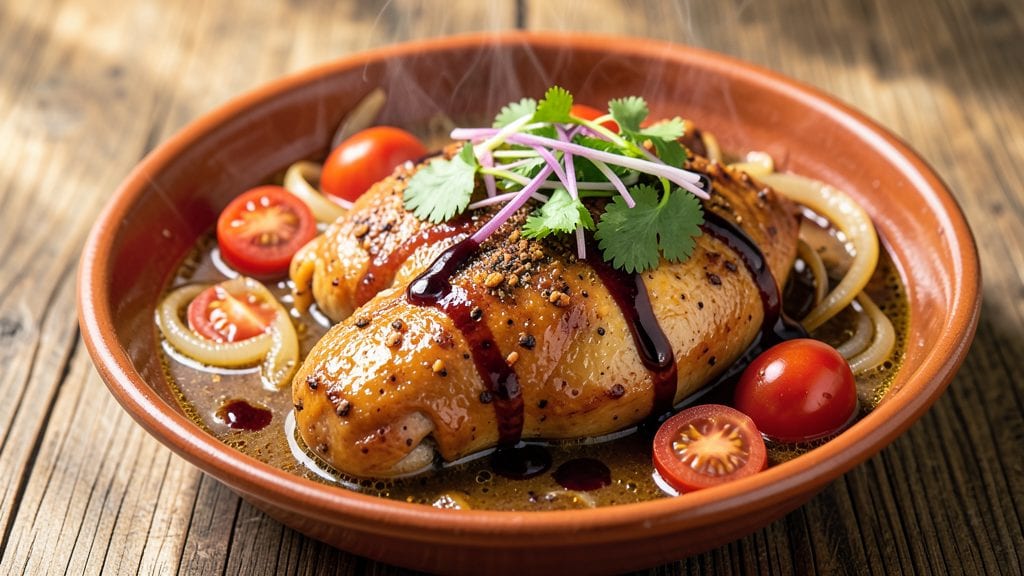
This Nigerian chicken recipe delivers the bold, comforting flavors of West Africa that bring warmth to any table. After years of perfecting traditional techniques, I've created a spicy pepper-stewed chicken with a signature celery crust that balances heat with tender, juicy meat.
The secret lies in the slow-cooked pepper sauce—smoky, aromatic, and just spicy enough to linger without overwhelming.
The dish begins with marinating chicken thighs in a blend of fresh peppers, ginger, and garlic, then building layers of flavor through a rich tomato-pepper stew that simmers until thick and velvety.
What makes this recipe special is the celery crust—a crispy, aromatic topping that adds texture and depth without overpowering the tender chicken underneath. Every bite delivers that perfect harmony of spice, tenderness, and comforting familiarity.
By the time you serve this dish, your kitchen will smell like home, and your guests will experience the same satisfaction I felt when I first mastered this recipe. The pepper sauce clings to each piece of chicken, while the celery crust adds a satisfying crunch that elevates every forkful.
This is the kind of meal that turns ordinary weeknights into celebrations.
Pair it with jollof rice or pounded yam for a complete experience, or serve it as a standalone centerpiece that commands attention. The beauty of this recipe is its versatility—adjust the spice level to your preference, and the method works equally well for family dinners or special gatherings.
Let's bring this comforting tradition to your kitchen.
Ingredients for nigerian chicken
Bold flavors start with these 15 ingredients. Nothing exotic—just the essentials for West African comfort.
| Ingredient | Amount | Notes |
|---|---|---|
| Chicken Thighs 🍗 | 1 ½ lb | Bone-in, skin-on preferred |
| Fresh Red Bell Peppers 🌶️ | 2 whole | Seeds removed, chopped |
| Fresh Ginger 🌿 | 2 tbsp | Grated, fresh is best |
| Garlic Cloves 🧄 | 6 cloves | Minced, fresh preferred |
| Scotch Bonnet Peppers 🌶️ | 2 whole | Seeds removed, chopped |
| Tomato Paste 🍅 | ½ cup | Smooth, not chunky |
| Canned Diced Tomatoes 🍅 | 1 can | 28 oz, fire-roasted preferred |
| Celery Stalks 🥬 | 3 whole | Thinly sliced, for crust |
| All-Purpose Flour 🌾 | ½ cup | For crust binding |
| Ground Black Pepper 🌶️ | 1 tsp | Freshly ground preferred |
| Salt 🧂 | 1 ½ tsp | Kosher or sea salt |
| Vegetable Oil 🫒 | ¼ cup | For frying crust |
| Fresh Thyme Leaves 🌿 | ¼ cup | Chopped, or 1 tsp dried |
| Onion 🧅 | 1 whole | Medium, chopped |
| Bay Leaves 🍃 | 2 whole | Dried, for stew |
The chicken thighs are non-negotiable—bone-in, skin-on for that crispy, juicy magic. Costco or local butchers often have them at great prices, but any grocery store works. Look for thighs with good marbling—they stay juicier. For the peppers, Scotch bonnet is key for that signature heat, but jalapeño or habanero in a pinch (reduce amount by half). Fresh ginger is a must—Asian markets usually have the best quality. Skip the jarred stuff; it's not the same. The tomato paste? Muir Glen is my go-to—smooth and consistent.
No Scotch bonnet? Dried arbol chili at half the amount gets you close. Fresh thyme out of season? Dried works at one-third the quantity. The celery crust needs crispy celery—thinly sliced, not chopped. If you can't find Scotch bonnet, Trader Joe's carries habanero peppers that work well. For the tomato paste, if you're using a squeeze tube, measure carefully—it's thicker than canned paste. The bay leaves? Remove them before serving—nobody wants a mouthful of leaf.
This dish tastes even better the next day. Store in the fridge for up to 5 days—the flavors meld beautifully. Freeze portions for 3 months if you're making a big batch. I always double the recipe and freeze half—weeknight dinners sorted. The celery crust stays crispy for about 2 hours after baking, so make it fresh if you can. Leftovers? Reheat gently with a splash of water to keep the sauce from drying out.
Why You'll Love This Recipe
- One-Pot Magic: I swear by this—just toss the chicken thighs, chopped ginger, and Scotch bonnet into one pot with a splash of water, and let it simmer. No chopping boards, no extra pans, just hands-off flavor while you handle the rest of dinner.
- Fiery Fresh Kick: That Scotch bonnet isn’t just for heat—it’s the secret to the bright, tangy punch that lingers. The ginger and garlic mellow it out, but the red bell peppers add a sweet crunch that balances everything perfectly. (Yes, even my kids ask for seconds.)
- Leftover Hero: This dish begs to be made extra. The flavors deepen overnight, and reheating it with a quick stir-fry of onions and tomatoes turns it into a whole new meal. I’ve fed a houseful with just two batches—no stress, no waste.
- Budget Game-Changer: Chicken thighs are cheap, and the veggies stretch across multiple meals. Honestly, I make this when I’m pinching pennies, and no one ever guesses. The Scotch bonnet might be pricier, but a little goes a long way—trust me, you won’t need much.
Step-by-step instructions for Nigerian chicken recipe
Here's how to create that rich, spicy stew with a crispy celery crust you'll crave.
Prepare the Chicken and Crust Ingredients
Start by trimming any excess fat from the 1.5 lb chicken thighs, leaving the skin intact for crispiness. In a large bowl, combine the 3 whole celery stalks (thinly sliced), 0.5 cup all-purpose flour, 1.5 tsp salt, and 1 tsp ground black pepper. This will form your flavorful crust.
In a separate bowl, mix the 2 tbsp fresh ginger (grated), 6 cloves garlic (minced), 0.25 cup fresh thyme leaves (chopped), and the 1 whole onion (chopped). This aromatic blend will infuse the stew with depth. The celery crust is key here—it adds texture and helps bind the spices to the chicken.
Create the Celery Crust and Sear the Chicken
Heat 0.25 cup vegetable oil in a large, heavy pot over medium heat. Add the chicken thighs, skin-side down, and let them sear for 4-5 minutes until golden brown. Don't crowd the pot—this ensures even browning.
Once golden, remove the chicken and set aside. In the same pot, add the celery-flour mixture and stir continuously for 2-3 minutes until it turns a deep golden brown. This creates a crispy, flavorful crust that will cling to the chicken. The crust should smell nutty and aromatic—this is your first indication the flavors are developing perfectly.
Build the Spicy Pepper Stew Base
Return the chicken to the pot and reduce heat to medium-low. Add the 0.5 cup tomato paste and stir well to coat the chicken and crust evenly. Let it cook for 3-4 minutes until the paste darkens slightly.
Now add the 2 whole fresh red bell peppers (chopped), 2 whole scotch bonnet peppers (seeds removed, chopped), and 1 can canned diced tomatoes. Stir in the 2 whole bay leaves and bring the mixture to a gentle simmer. The scotch bonnet peppers will add heat, while the bell peppers provide sweetness to balance the flavors. Let it simmer uncovered for 10 minutes to allow the raw flavors to meld.
Simmer the Chicken Until Tender
After the initial simmer, increase heat to medium and add 1 cup of water to the pot. The liquid should just cover the chicken thighs. Bring to a boil, then reduce heat to low and cover partially with a lid. Let it simmer gently for 45-50 minutes, stirring occasionally.
You'll know it's done when the chicken is fork-tender and the sauce has thickened into a rich, glossy stew. The chicken should pull away from the bone easily, and the sauce should coat the back of a spoon. If the sauce thickens too much, add another ¼ cup of water to maintain the perfect consistency. The aroma should be intoxicating—spicy, sweet, and deeply savory.
Rest and Serve with Confidence
Remove the chicken from the pot and let it rest for 5 minutes before serving. This resting period allows the juices to redistribute, ensuring each bite is moist and flavorful. Discard the bay leaves before serving.
Serve the chicken with the rich pepper stew spooned over the top, accompanied by steamed rice or crusty bread. The contrast of the crispy celery crust with the tender, spicy stew creates a truly comforting meal. Don't forget to taste and adjust the seasoning—this is where you can add a pinch more salt or black pepper if needed. Enjoy the warmth and flavors of this hearty Nigerian chicken dish!
Pro Tips For Making Nigerian Chicken
- BLISTER THE PEPPERS FIRST: Toss your red bell peppers and Scotch bonnet into a screaming-hot dry pan for 2-3 minutes before adding anything else. This concentrates their sweetness and smokiness—no need to wait for them to soften later. (Yes, even if they look sad and charred at first.)
- GINGER-GARLIC PASTE IS NON-NEGOTIABLE: Skip the minced ginger and garlic—blend them into a smooth paste with a splash of water. This distributes flavor evenly and prevents bitter chunks that ruin the sauce. I learned this the hard way after finding garlic spears in my "perfect" batch.
- DON’T RUSH THE CHICKEN: Let the thighs brown undisturbed for 5-6 minutes on medium-high heat before flipping. Crowding the pan steams them instead of searing, and you’ll end up with mushy, flavorless meat. (Your future self will thank you.)
- SAVE THE SCOTCH BONNET JUICE: After seeding and chopping the Scotch bonnet, squeeze the empty pod dry over the sauce. That residual heat and moisture makes the dish sing—don’t toss it. (Yes, it’s weird, but it works.)
Best sauces and condiments for this recipe
Spicy Pepper Sauce
This rich, aromatic sauce is the heart of the dish. Start with 2 Scotch bonnet peppers (seeds removed) blended with 2 red bell peppers and 1 can fire-roasted tomatoes until smooth. For extra depth, add 1 tbsp tomato paste and 1 tsp grated ginger before simmering.
The sauce should reduce to a thick, glossy consistency—this takes about 30-40 minutes on low heat. 🌶️
Pro tip: If you love heat, keep the Scotch bonnet seeds. For milder flavor, remove them completely. I often add 1 bay leaf while simmering for extra aroma, but remember to remove it before serving. The sauce tastes even better the next day as flavors meld together.
Celery Crust Magic
The crispy celery crust is what makes this dish special. Thinly slice 3 celery stalks and coat them in ½ cup flour, 1.5 tsp salt, and 1 tsp black pepper.
Fry in ¼ cup vegetable oil until golden brown—about 2-3 minutes. The key is to keep stirring so it doesn't burn. This crust adds texture and helps lock in moisture during cooking.
For extra flavor, I sometimes add 1 tsp smoked paprika to the crust mixture. The smoky note pairs beautifully with the spicy stew. Let the crust cool slightly before pressing it onto the chicken—this prevents it from falling apart when you serve it.
Garnish Game-Changers
Fresh cilantro or parsley adds brightness to the dish. Chop ¼ cup and sprinkle over the chicken just before serving. For a tangy kick, add 1 tbsp lemon juice to the sauce in the final minutes of cooking. The acidity cuts through the richness and balances the heat. 💛
Don't overlook toasted breadcrumbs as a garnish. Fry 2 tbsp breadcrumbs in a dry pan until golden, then sprinkle over the top for added crunch. This works especially well if you're serving the dish with rice—it adds another layer of texture to contrast with the soft chicken.
Sauce Boosters
Need more depth? Stir in 1 tbsp peanut butter during the final 5 minutes of cooking. It sounds unusual, but it adds a rich, nutty note that complements the spicy flavors. For a smoky twist, add ½ tsp liquid smoke to the sauce.
I also love adding ½ cup coconut milk for creaminess—just stir it in during the last 10 minutes of simmering.
For a vegetarian-friendly version, reduce the sauce slightly and serve it over garlic fried rice or plantain chips. The bold flavors work perfectly as a standalone dish too. If you're feeling adventurous, try adding 1 tbsp grated nutmeg to the sauce—it adds warmth that pairs beautifully with the spice.
Nutrition facts
Frequently asked questions
What makes this Nigerian chicken recipe different from other spicy chicken dishes?
The celery crust is the game-changer! Most recipes focus on the stew alone, but this crispy, aromatic topping adds texture and depth that balances the rich, spicy sauce. The combination of Scotch bonnet peppers and red bell peppers creates a perfect heat-sweetness contrast, while the slow simmer develops layers of flavor you won't find in quick-cooked dishes.
Can I substitute Scotch bonnet peppers if I can't find them?
Use jalapeño or habanero instead, but reduce the amount by half since they're hotter. For milder heat, try dried arbol chili at half the quantity. Always remove seeds to control spice levels. If you prefer no heat, omit them entirely and add extra red bell peppers for sweetness.
How do I adjust the spice level for kids or sensitive eaters?
Remove all seeds from the Scotch bonnet peppers and reduce the quantity to 1 pepper instead of 2. For extra mildness, blend the peppers with ½ cup extra tomato paste to dilute the heat. Serve the chicken with a side of plain rice or yogurt sauce to help balance any lingering spice.
Can I make this recipe in a slow cooker or Instant Pot?
Yes! For the slow cooker, brown the chicken and crust first, then transfer everything to the pot with 1 cup water. Cook on low for 4-5 hours until tender. For the Instant Pot, use the sauté function to brown the chicken and crust, then pressure cook for 20 minutes on high. Both methods work well, but the stovetop version gives you more control over the sauce consistency.
What's the best way to store leftovers?
Store in an airtight container in the fridge for up to 5 days. The flavors actually improve as they meld! For longer storage, freeze portions for 3 months. Reheat gently with a splash of water to maintain sauce moisture. The celery crust stays crispy for about 2 hours after reheating, so it's best served fresh.