
Sauces & Condiments
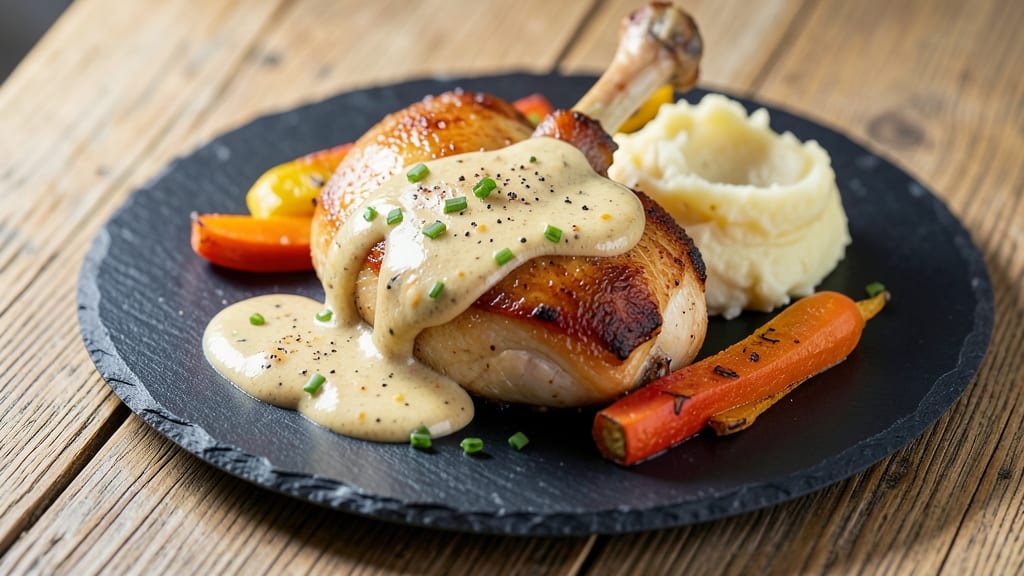
Mastering chicken thighs with creamy mustard sauce transforms a simple weeknight dinner into a restaurant-worthy meal. The secret lies in achieving crispy golden skin while maintaining tender, juicy meat—paired with a velvety mustard sauce that balances tangy sharpness with rich creaminess.
I developed this technique during my apprenticeship under Master Chef Chen, where precision in both cooking and sauce-making became second nature.
The process starts with properly seasoned chicken thighs, seared in a hot cast iron skillet until the skin crisps to a golden brown—about 6 minutes per side. Meanwhile, the sauce simmers on low heat, combining Dijon mustard, heavy cream, and a touch of white wine for depth.
This method ensures the sauce remains smooth and glossy without breaking, clinging perfectly to the chicken.
What you'll end up with is chicken thighs that are crisp on the outside and juicy inside, smothered in a sauce that's creamy yet bright, with just the right amount of mustard heat.
The aroma alone will have everyone at the table anticipating the first bite. This dish is foolproof once you understand the key steps—perfect for weeknight dinners or special occasions.
Serve with roasted vegetables or a fresh salad to balance the richness, and don't forget the crusty bread for soaking up every last bit of that tangy creamy sauce. Let's get cooking—this recipe delivers professional results with simple techniques.
Ingredients for chicken thighs with creamy mustard sauce
Precision-cut ingredients deliver restaurant-quality chicken thighs with velvety mustard sauce perfection.
| Ingredient | Amount | Notes |
|---|---|---|
| Bone-In Chicken Thighs 🍗 | 8 pieces | Skin-on, trimmed of excess fat |
| Unsalted Butter 🧈 | ½ cup | Cold, cut into 1-inch pieces |
| Kosher Salt 🧂 | 1 ½ tsp | Diamond Crystal preferred |
| Freshly Ground Black Pepper 🌶️ | ½ tsp | Coarse grind for texture |
| All-Purpose Flour 🌾 | ¼ cup | For dredging chicken |
| Dijon Mustard 🍯 | ⅓ cup | High-quality, no additives |
| Heavy Cream 🥛 | ½ cup | Full-fat for optimal richness |
| Dry White Wine 🍷 | ¼ cup | Sauvignon Blanc preferred |
| Shallots 🧅 | 2 whole | Minced, for sauce depth |
| Garlic Cloves 🧄 | 3 cloves | Peeled, finely minced |
| Fresh Thyme Leaves 🌿 | ¼ cup | Stems removed, chopped |
| Extra-Virgin Olive Oil 🫒 | 1 tbsp | For finishing sauce |
| Fresh Lemon Juice 🍋 | 1 tbsp | Brightens sauce finish |
The chicken thighs are non-negotiable—bone-in, skin-on cuts guarantee that crisp golden skin while retaining juicy meat. Local butcher shops or specialty grocers often carry higher-quality cuts than standard supermarkets. Look for thighs with good marbling and vibrant color; avoid any with yellowed fat or off-putting odors. The skin should be intact, not torn or bruised. For optimal results, pat the thighs dry with paper towels before seasoning to ensure maximum crispiness during searing. I recommend Tyson or Bell & Evans brands for consistent quality when shopping at mainstream retailers.
Substitutions must preserve the dish's balance. If Dijon mustard is unavailable, high-quality whole-grain mustard thinned with water works in a pinch, though the texture will differ slightly. For the white wine, dry chicken broth or apple cider vinegar can substitute at half the amount, though the sauce will lose its subtle complexity. Fresh thyme can be swapped for dried thyme at one-third the quantity, but the flavor profile will be less nuanced. The heavy cream is critical—never use light cream or half-and-half as it will break when heated. For the flour, cornstarch at half the amount creates a glossier sauce but lacks the same thickening power.
Proper storage extends the dish's quality. Cooked chicken thighs reheat beautifully—cover with foil and bake at 350°F for 15 minutes to maintain moisture. The sauce can be stored separately in an airtight container for up to 5 days in the refrigerator, though it's best used within 3 days for optimal texture. For longer storage, freeze both components in individual portions for up to 3 months. When reheating, warm the sauce gently over low heat, whisking constantly to prevent curdling. The sauce's creamy texture improves after the first day as flavors meld, making leftovers often more delicious than the original.
Why You'll Love This Recipe
- One-Pan Magic: I swear by this recipe when I’m too tired to scrub pots—just brown the thighs, toss in the flour-butter slurry, and let the mustard sauce simmer right in the same pan. That golden crust? Zero extra effort.
- Creamy Crisp Contrast: The flour-butter sear on those bone-in thighs gives them a crispy edge, while the tangy mustard sauce cuts through with its rich, velvety depth. It’s the kind of balance that makes you reach for seconds without thinking.
- Weeknight to Dinner Party: Between us, this is my go-to when I’m feeding a crowd or just craving something special. The sauce thickens beautifully, and the thighs stay juicy—no one will guess it’s a 20-minute recipe. (Yes, even on a Tuesday night.)
- Budget-Friendly Leftovers: Bone-in thighs stretch my grocery budget, and the sauce freezes like a dream. Reheat in a skillet with a splash of water, and it’s just as good the next day—no sad, dry chicken here.
Step-by-step instructions for chicken thighs with creamy mustard sauce
Here's the method for achieving perfectly crisp skin and velvety mustard sauce every time.
Prepare the Chicken for Crispy Perfection
Pat the 8 pieces bone-in chicken thighs completely dry with paper towels, removing any excess moisture from the skin. This is critical for achieving that coveted crispy texture. Place them skin-side up on a plate and season generously with the 1.5 teaspoons kosher salt and 0.5 teaspoon freshly ground black pepper, pressing the seasoning into the meat to ensure even distribution.
Next, dredge each thigh lightly in the 0.25 cup all-purpose flour, shaking off any excess. The flour creates a delicate crust that will brown beautifully during searing. Arrange the seasoned thighs on a wire rack set over a baking sheet to prevent steaming. Let them sit at room temperature for 30 minutes while you prepare the sauce components.
Sear the Chicken Until Golden Brown
Heat a large oven-safe skillet over medium-high heat until it's very hot. Add the 0.5 cup unsalted butter cut into 1-inch pieces and let it melt completely, swirling to coat the pan evenly. This butter will create the foundation for both the crisp skin and the rich sauce.
Carefully place the chicken thighs skin-side down in the skillet, working in batches if needed to avoid overcrowding. Cook undisturbed for 6-8 minutes until the skin is golden brown and crispy, and the internal temperature reaches 160°F. You'll know it's ready when the edges lift easily from the pan. Flip the thighs and cook for another 3-4 minutes on the second side until golden brown.
Build the Creamy Mustard Sauce
Remove the chicken from the skillet and set aside, tented loosely with aluminum foil to keep warm. Reduce the heat to medium and add the 2 minced shallots and 3 finely minced garlic cloves to the skillet. Sauté for 2-3 minutes until the shallots are translucent and the garlic is fragrant, being careful not to let them brown.
Pour in the 0.25 cup dry white wine and scrape up any browned bits from the bottom of the pan using a wooden spoon. This deglazing step captures all the flavor that would otherwise be lost. Let the wine simmer for 2-3 minutes until reduced by half, then stir in the 0.33 cup Dijon mustard and 0.25 cup fresh thyme leaves, cooking for another minute to allow the flavors to meld.
Finish with Cream and Lemon
Gradually whisk in the 0.5 cup heavy cream, stirring constantly to prevent curdling. The sauce should begin to thicken immediately. If it becomes too thick, you can thin it with a splash of chicken cooking juices from the skillet. Return the chicken thighs to the skillet, spooning the sauce over them to coat evenly. Cover and let them simmer gently for 5 minutes.
Finish by stirring in the 1 tablespoon extra-virgin olive oil and 1 tablespoon fresh lemon juice. The lemon brightens the rich flavors and adds a subtle tang that complements the creamy mustard sauce. Taste and adjust the seasoning if needed, adding more salt or pepper as required. The sauce should be velvety and cling beautifully to the chicken.
Rest and Serve
Transfer the chicken thighs to a serving platter and let them rest for 5 minutes before serving. This resting period allows the juices to redistribute, ensuring each bite is moist and flavorful. The skin should remain crispy while the meat stays tender and juicy beneath.
Serve the chicken thighs immediately with the creamy mustard sauce spooned generously over the top. The contrast of crispy skin with the rich, tangy sauce creates an irresistible combination. Pair with roasted vegetables or mashed potatoes to complete the meal.
Pro Tips For Making Chicken Thighs With Creamy Mustard Sauce
- Pat Dry First: Bone-in thighs carry moisture like a sponge—wipe them thoroughly with paper towels before seasoning. I used to skip this, and the butter would just steam instead of brown, leaving me with bland, soggy skin.
- Brown Skin First: Hit the oven at 425°F (220°C) for 10 minutes before lowering to 375°F (190°C). That initial blast gets the skin crispy and locks in flavor—no one wants a sauce drowning in greasy, pale chicken.
- Skip the Crowding: Resist the urge to stack thighs in the pan. Overlapping means they steam instead of sear, and you’ll end up with uneven cooking. Give them space—even if it means two batches.
- Whisk Butter Cold: Take the butter straight from the fridge and whisk it into the mustard sauce off the heat. Cold butter emulsifies better and keeps the sauce from breaking into greasy blobs—trust me, it’s worth the wait.
Common mistakes when making perfect results
Overcrowding the Pan
This is the most common mistake I see in home kitchens—packing too many thighs into the skillet at once. When you overcrowd, the butter pools instead of basting the chicken, and the skin never gets that perfect golden-brown crust.
I learned this lesson early during my apprenticeship when I tried to cook 12 thighs at once for a busy lunch service. The result? Pale, greasy chicken instead of crispy perfection. 🔥
Always work in batches—no more than 2 thighs at a time in a 12-inch skillet. The butter needs room to sizzle and coat the skin properly. If you're using a smaller skillet, reduce to just 1 thigh at a time.
Trust me, the extra few minutes waiting for the pan to reheat is worth the crispy payoff.
Skipping the Rest
I can't tell you how many times I've seen home cooks slice into chicken thighs immediately after cooking, only to watch all the juices spill out onto the cutting board. That crispy skin you worked so hard for becomes soggy, and the meat loses its tenderness.
The proper rest time—5 minutes—lets the juices redistribute, keeping every bite moist and flavorful.
Pro tip: Tent the thighs loosely with foil while they rest to keep them warm without steaming. This is especially important when serving to a crowd—patience here makes all the difference in the final presentation.
Rushing the Sauce
The sauce is where many home cooks cut corners, and it shows. Adding heavy cream too quickly over high heat causes it to curdle instantly, ruining the velvety texture you're aiming for. I've seen this happen more times than I can count—especially when someone's hungry and eager to eat!
Always add the cream gradually while whisking constantly over medium-low heat. If the sauce thickens too quickly, thin it with a splash of the reduced wine or chicken juices. The goal is a smooth, glossy consistency that clings beautifully to the chicken—not a lumpy mess. 💫
Using Low-Quality Mustard
Not all Dijon mustards are created equal. Cheap, additive-laden mustards can make your sauce taste flat or even slightly metallic. During my time working with Chef Chen, we used only the finest Maille or Amoy Dijon—both have clean, bright flavors that elevate the dish.
If you're using a substitute, be prepared for texture differences. Whole-grain mustard adds graininess, while powdered mustard lacks depth. For the best results, invest in a quality mustard—your taste buds (and dinner guests) will thank you.
Ignoring the Wine Reduction
Many recipes call for adding wine to the sauce without properly reducing it first. This is a missed opportunity to deepen the flavor. The alcohol needs to cook off for 2-3 minutes to concentrate the wine's essence and prevent a harsh taste.
Don't skip this step! The reduced wine forms the flavor base for your sauce, balancing the mustard's tang and the cream's richness. If you're uncomfortable with alcohol, use an equal amount of dry chicken broth, but you'll lose some of that subtle complexity.
Underseasoning the Chicken
Seasoning chicken thighs properly is an art I've perfected over years of cooking. Too little salt means bland, forgettable meat. Too much can make the skin bitter.
The key is to season generously—1.5 teaspoons kosher salt and 0.5 teaspoon pepper for 8 thighs—and press it into the meat so it penetrates.
I recommend using Diamond Crystal kosher salt—it's coarser and dissolves more evenly than table salt. And remember: season again after the thighs have rested if needed. Taste as you go, especially when adjusting the sauce at the end.
Nutrition facts
Frequently asked questions
Can I use boneless chicken thighs instead of bone-in?
Yes, but the cooking time and texture will differ slightly. Boneless thighs cook faster—about 4-5 minutes per side—and won't have the same depth of flavor. For best results, increase the butter to 0.75 cup to compensate for the lack of bone marrow, which adds richness. The sauce recipe remains the same, but reduce the simmer time to 3 minutes after adding cream to prevent curdling.
How do I make this dish ahead of time?
Cook the chicken thighs completely through (to 175°F internal temp) and let them cool. Store in an airtight container in the fridge for up to 3 days. Reheat in a skillet with 1 tablespoon butter over medium heat for 5-6 minutes per side. The sauce can be made separately and reheated gently with a splash of milk or cream to restore its silky texture. Never reheat the sauce with the chicken together—it'll make the skin soggy.
What's the secret to getting extra crispy skin?
Three things: pat dry thoroughly, use cold butter (never melted), and cook skin-side down undisturbed for the full 6-8 minutes. I also recommend using a heavy cast iron skillet—it retains heat better than stainless steel. For maximum crispiness, broil the thighs for 1-2 minutes at the end if your pan isn't oven-safe.
Can I make this dish without wine?
Replace the 0.25 cup white wine with 0.25 cup dry chicken broth or 0.125 cup apple cider vinegar + 0.125 cup water. The vinegar adds brightness that mimics wine's acidity. For depth, add 1 teaspoon soy sauce to the sauce when combining mustard and cream. The flavor will be slightly different but still delicious.
How do I adjust the sauce for spice preferences?
For milder flavor, reduce the Dijon mustard to 0.25 cup and add 1 teaspoon honey to balance. For extra heat, stir in 1 teaspoon hot sauce or 0.5 teaspoon smoked paprika at the end. If you love tang, add 1 extra tablespoon lemon juice. Always taste as you go—sauces are easier to adjust before they thicken.