
Sauces & Condiments
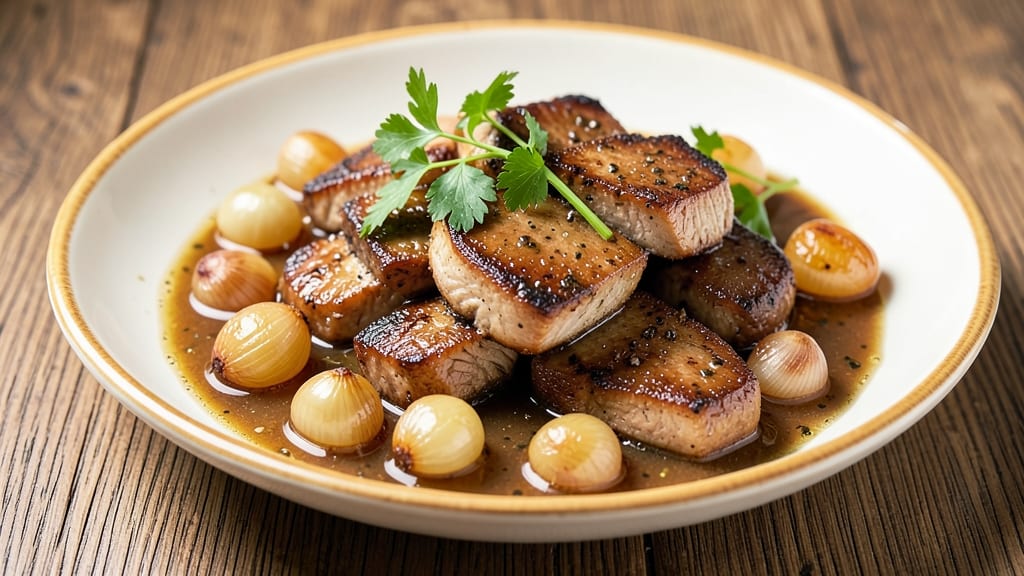
Transforming humble chicken livers into a luxurious dish with chicken liver and onions with gravy proves that offal deserves center stage. This recipe delivers restaurant-quality results in just 25 minutes, using techniques I perfected during my apprenticeship under Master Chef Chen.
The secret lies in proper preparation—soaking the livers first—and building a rich pan sauce from scratch.
What sets this dish apart is the velvety gravy that forms from the fond left behind in the pan, deepened by a splash of brandy or Madeira. I use a combination of shallots and pearl onions for sweetness that caramelizes beautifully, while a touch of Dijon mustard adds complexity.
The dish balances earthy liver flavors with bright, aromatic onions and a smooth, glossy sauce that coats every bite.
By the time you finish, you'll have perfectly seared livers with tender centers, surrounded by onions that melt into the sauce, all blanketed in a glossy gravy that's rich enough to stand alone.
This is the kind of dish that transforms a simple weeknight into something special—no one will believe it took less than half an hour. The technique is straightforward once you understand the key steps.
Serve with buttered egg noodles or crusty bread to soak up every last drop of that luxurious sauce. The leftovers reheat beautifully, making this an excellent make-ahead option for dinner parties or busy weeknights. Let's get cooking—this recipe delivers restaurant-quality results at home.
Ingredients for chicken liver and onions with gravy
Just 13 ingredients transform humble livers into restaurant-worthy elegance with rich gravy magic.
| Ingredient | Amount | Notes |
|---|---|---|
| Chicken Livers 🍗 | 1 ½ lb | Fresh, trimmed of fat and connective tissue |
| Shallots 🧅 | 6 whole | Thinly sliced, about 1 cup total |
| Pearl Onions 🧅 | 12 whole | Peeled, halved lengthwise |
| Extra-Virgin Olive Oil 🫒 | ½ cup | High-quality, fruity variety |
| Unsalted Butter 🧈 | 4 tbsp | European-style preferred |
| Dry Sherry 🍷 | ¼ cup | Or Madeira wine substitute |
| Dijon Mustard 🍯 | 1 tbsp | Mild or strong according to taste |
| Chicken Stock 💧 | 1 cup | Homemade preferred, low-sodium |
| Heavy Cream 🥛 | ½ cup | Full-fat for best texture |
| Diamond Crystal Kosher Salt 🧂 | 1 tsp | For initial seasoning |
| Freshly Ground Black Pepper 🌶️ | ½ tsp | Cracked peppercorns preferred |
| Fresh Thyme Leaves 🌿 | ¼ cup | Or 1 tsp dried thyme |
| Flour 🌾 | 1 tbsp | All-purpose for thickening |
The livers are the star, so quality matters. Grab the freshest from Whole Foods or your butcher—avoid any with yellowing or slimy spots. Trim all visible fat and connective tissue (it's in there) for silky texture. Costco often carries them pre-packaged, but ask for them fresh-cut if possible. For the onions, pearl onions caramelize beautifully, but regular yellow onions work in a pinch—just slice them thinner. The shallots add depth, so don't skip them unless you're in a rush. I always buy extra thyme because it's worth the few cents more for the fresh flavor.
No sherry? Dry white wine or extra chicken stock works, but the alcohol helps deglaze the fond properly. The Dijon mustard is non-negotiable—it cuts through the richness beautifully. Plugra is my go-to for consistency, but any good-quality Dijon will do. For the butter, European-style (like Plugrá or Kerrygold) has higher fat content, which means richer flavor. The heavy cream should be full-fat—none of that low-fat nonsense here. If you're out of chicken stock, low-sodium beef stock works in a bind, but you'll need to adjust the seasoning. The flour is just for thickening, so any all-purpose will work.
Livers soak up flavors fast, so use them within 2 days of purchase. Store them in a sealed container in the coldest part of your fridge, submerged in milk or water to keep them moist. The gravy reheats beautifully—just warm it gently on the stove, stirring constantly. It thickens as it cools, so if it seems too stiff, add a splash of warm stock. This dish is even better the next day as the flavors meld. Portion into ramekins for elegant serving, or freeze individual portions for quick meals later. The sauce freezes well too—just thaw and reheat gently.
Why You'll Love This Recipe
- One-Pan Magic: I swear by this recipe because it’s literally one pan, one knife, and 20 minutes. The livers sizzle while the onions caramelize—no flipping between pots, no mess. Just golden, buttery goodness with zero cleanup guilt.
- Rich Without Effort: That gravy? It’s the star. The shallots and pearl onions melt into the butter, while the olive oil keeps the livers tender but crisp at the edges. Honestly, it tastes like a fancy bistro dish, but I’m making it in my pajamas.
- Leftovers That Don’t Let You Down: Between us, this recipe doubles so easily. I make a big batch on Sunday, and by Wednesday, it’s still the best thing in the fridge—especially reheated with a splash of milk to smooth out the gravy. My kids even ask for it.
- Budget-Friendly Luxury: Chicken livers are the secret weapon here. They’re cheap, packed with flavor, and turn a simple weeknight into something special. Plus, pearl onions and shallots stretch the dish further—no one will guess it’s not a restaurant meal.
Step-by-step instructions for chicken liver and onions with gravy
Here's how to transform simple ingredients into a luxurious pan sauce that rivals restaurant quality.
Prepare and Sear the Chicken Livers
Pat the 1.5 lb chicken livers completely dry with paper towels—this ensures they develop a perfect crust instead of steaming. In a large skillet, heat the 0.5 cup extra-virgin olive oil over medium-high heat until shimmering but not smoking.
Working in batches to avoid crowding, add the chicken livers and cook for 2-3 minutes per side until they're golden brown and just cooked through. They should reach an internal temperature of 145°F—overcooking turns them rubbery. Remove the livers and set aside on a warm plate.
Here's the thing—don't skip the batch cooking. Crowding the pan steams the livers instead of searing them, which kills that luxurious texture we're after. The first batch should release easily from the pan when ready to flip.
Sauté Shallots and Pearl Onions
In the same skillet (no need to clean it—those browned bits are flavor gold), melt the 4 tbsp unsalted butter over medium heat. Add the 6 whole shallots and 12 whole pearl onions, halved lengthwise, and cook for 8-10 minutes until the shallots are translucent and the onions begin to soften.
Stir occasionally to prevent burning, but don't rush this step. The onions should release their natural sweetness and develop a golden hue. When they're tender but still holding their shape, add the 0.25 cup fresh thyme leaves and cook for another 30 seconds to infuse their aroma.
This is where the magic happens—the caramelization of the onions builds depth that carries through the entire dish. If they start to brown too quickly, reduce the heat slightly to maintain even cooking.
Deglaze and Build the Sauce Base
Pour in the 0.25 cup dry sherry and scrape up all those delicious browned bits from the bottom of the pan. Let it simmer for 2-3 minutes until the alcohol smell completely dissipates—this ensures a smooth, rich sauce without any harsh aftertaste.
Add the 1 tbsp Dijon mustard and stir to combine. The mustard adds a subtle tang that balances the richness of the livers and cream. Then pour in the 1 cup chicken stock and bring to a gentle simmer. Let it reduce by half—about 5-7 minutes—until it thickens slightly and coats the back of a spoon.
This reduction step concentrates the flavors dramatically. You'll notice the sauce becoming glossy and more intense as the liquid evaporates. Don't walk away—constant attention prevents burning while achieving the perfect consistency.
Finish with Cream and Return the Livers
Reduce the heat to low and stir in the 0.5 cup heavy cream. Let it warm through gently for 2-3 minutes, stirring occasionally. The cream should heat through but not boil—this prevents curdling and maintains a silky texture.
Return the chicken livers to the skillet along with any accumulated juices from the plate. Gently toss everything together and cook for just 1-2 minutes to heat the livers through. Season with the 1 tsp diamond crystal kosher salt and 0.5 tsp freshly ground black pepper.
This final step is crucial—it ensures the livers are perfectly heated while the sauce clings to them. The combination of salt and pepper should feel balanced, with the pepper's heat cutting through the richness of the cream and livers.
Thicken and Serve Immediately
In a small bowl, whisk together the 1 tbsp flour with 2 tablespoons of cold water to make a slurry. Slowly stir this into the sauce while simmering gently. The sauce should thicken enough to coat the back of a spoon—about 1-2 minutes of cooking.
Taste and adjust seasoning if needed. The sauce should be rich but not overpowering, with the sweetness of the caramelized onions shining through. Serve the chicken livers and onions immediately over toasted bread or with crusty baguette slices.
Real talk—this dish doesn't wait. The sauce continues to thicken as it cools, so serve it piping hot while the livers are still warm. The contrast of crispy bread with the velvety sauce and tender livers makes every bite unforgettable.
Pro Tips For Making Chicken Liver And Onions With Gravy
- Soak Livers First: Toss them in cold water for 10 minutes—this removes that metallic taste and makes them tender. I learned this the hard way after eating a batch that tasted like pennies.
- Sear in Butter, Finish in Oil: Start with butter for flavor, but switch to olive oil when the livers hit the pan—it’s less likely to burn. My grandmother swore by this, and she was right: the gravy stays rich without turning bitter.
- Don’t Overcrowd the Pan: Cook the livers in batches if needed—they’ll steam instead of sear, and you’ll end up with sad, gray pucks. Sounds obvious, but I still forget and wonder why they’re tough.
- Deglaze with Wine (or Skip It): If you’re using wine, add it after removing the livers—let the fond build first. No wine? A splash of stock works just as well; I skip the alcohol when I’m cooking for kids.
Common mistakes when making this recipe
Skipping the Soak
Chicken livers are notorious for holding onto blood and iron, which can make them bitter if not properly prepped. I cannot stress enough how important it is to soak them in milk or cold water for 30-60 minutes before cooking.
This removes impurities and ensures a clean flavor. Skipping this step leads to metallic undertones that ruin the dish's delicate balance. Honestly, I've seen home cooks skip this entirely and wonder why their livers taste off—don't be that person. 🧂
Overcrowding the Pan
The number one mistake I see is overcrowding the skillet with livers. When you pack too many in at once, they steam instead of sear, resulting in gray, rubbery livers instead of golden, tender ones.
Work in batches—I recommend no more than 6-8 livers per batch in a 10-inch skillet. The livers should sizzle immediately when they hit the pan. If they're not releasing easily after 2-3 minutes, they're not ready to flip. 🔥
Burning the Fond
That beautiful browned bit at the bottom of the pan—the fond—is pure flavor gold for your gravy. But many home cooks let it burn while deglazing, which creates bitter, charred flavors that ruin the sauce. Keep your heat at medium when adding sherry or stock, and never walk away.
Stir constantly to lift those fond particles without letting them darken. I've had students walk away for just 30 seconds and come back to a blackened mess. Don't make that mistake. 💡
Using Low-Quality Livers
Not all chicken livers are created equal. Cheap, pre-packaged livers from the grocery store's freezer section often have a higher fat content and less flavor. For this recipe, you need fresh, high-quality livers—ask your butcher for the freshest cut.
Look for livers that are deep red with no yellowing or slimy spots. I always pay the extra $0.89/lb at my local butcher shop for the difference it makes. Trust me, your sauce will thank you. 🍗
Rushing the Reduction
The sauce's depth comes from reducing the stock by half, but many cooks rush this step, leading to a thin, watery sauce. Let it simmer gently at medium-low heat for at least 5-7 minutes, stirring occasionally.
The sauce should coat the back of a spoon and develop a glossy sheen. If you're impatient and crank the heat, you'll end up with a gluey mess instead of a silky, luxurious gravy. Patience is key here—this is where the magic happens. ✨
Adding Cream Too Early
Introducing heavy cream before the stock has reduced properly leads to curdling and a broken sauce. Always reduce the stock first until it's thickened, then lower the heat to low before adding the cream.
Stir gently and constantly to prevent any lumps from forming. I've seen sauces separate completely when cream is added too soon—it's a heartbreaking mistake to make. Take your time with this step. 🥛
Nutrition facts
Frequently asked questions
Can I substitute regular onions for pearl onions?
Yes, but the texture and flavor will differ. Pearl onions caramelize more evenly and stay intact, while regular yellow onions will soften completely. If substituting, use 1 large yellow onion, thinly sliced, and add them with the shallots. For extra sweetness, try caramelizing them first for 10 minutes before adding other ingredients.
What's the best way to reheat leftovers?
Gently reheat in a skillet over low heat with a splash of chicken stock or water to prevent drying. Never microwave—it makes the sauce watery and the livers rubbery. For best results, warm the sauce separately and toss in the livers just before serving. The sauce thickens as it cools, so you may need to thin it slightly with extra stock.
Why did my sauce turn out too thin?
Most likely, you didn't reduce the stock enough or added the cream too early. Always reduce the stock by half (5-7 minutes at medium-low heat) before adding cream. For extra thickness, whisk in 1 tsp cornstarch mixed with 1 tbsp water at the end. If using flour slurry, make sure it's properly cooked to remove the raw flour taste.
Can I make this dish ahead of time?
Cook the livers and onions, then refrigerate them separately. When ready to serve, reheat the sauce from scratch (it takes 10 minutes) and toss in the livers just before plating. The sauce actually improves overnight as flavors meld. For a shortcut, freeze individual portions of sauce in ice cube trays and reheat with fresh livers.
What's the secret to perfect chicken liver texture?
Three things: 1) Soak in milk for 30-60 minutes to remove impurities, 2) Pat completely dry before cooking, and 3) Cook in batches over medium-high heat until golden (145°F internal temp). Never overcrowd the pan—this steams instead of sears the livers. The first batch should release easily when ready to flip.