
Main Courses
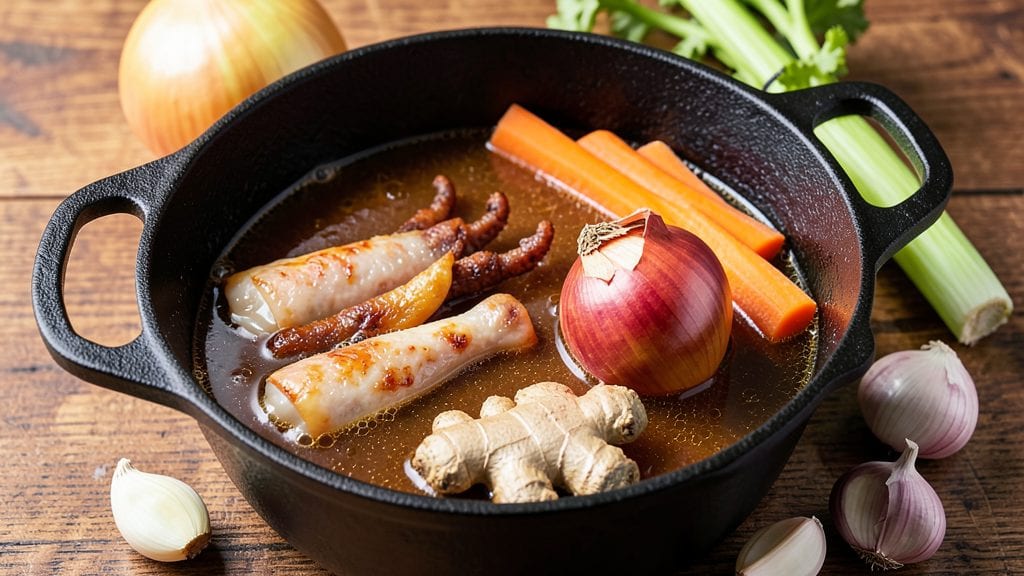
Creating an authentic chicken feet stock unlocks the deep, gelatinous richness that defines pho, hot pot, and braised dishes. This traditional technique transforms tough connective tissue into a silky, umami-packed broth that elevates any Asian-inspired meal.
I’ve perfected the slow-simmer method over years of testing, balancing authenticity with practicality for home cooks.
The process begins with thorough cleaning and blanching to remove impurities, followed by a 4-6 hour simmer that extracts collagen for that signature body. Unlike quick broths, this stock rewards patience—each layer of flavor develops gradually, from the caramelized chicken feet to the aromatic vegetables.
For faster results, a pressure cooker cuts time to 90 minutes without sacrificing depth.
What you’ll end up with is a glossy, golden broth with a velvety texture and concentrated savoriness—ideal for pho, ramen, or braising meats. The gelatinous quality makes it perfect for chilled soups or as a base for rich stews.
Store it in the freezer for up to 3 months, or use it fresh within a week for maximum flavor.
This stock isn’t just a recipe; it’s the foundation for restaurant-quality Asian dishes at home. Whether you’re making pho, hot pot, or braised pork belly, this umami-rich broth will transform your cooking. Let’s get started on building your flavor base.
Ingredients for chicken feet stock
Four pounds of chicken feet and aromatic vegetables transform into velvety, umami-rich stock perfect for pho and braises.
| Ingredient | Amount | Notes |
|---|---|---|
| Chicken Feet 🦶 | 2 lb | Fresh, cleaned and blanched |
| Yellow Onion 🧅 | 1 whole | Quartered, peel on |
| Carrot 🥕 | 2 whole | Cut into 2-inch chunks |
| Celery Stalks 🌿 | 4 whole | Cut into 2-inch pieces |
| Fresh Ginger 🧅 | 2 oz | Unpeeled, sliced into coins |
| Garlic Cloves 🧄 | 8 cloves | Smashed, peel on |
| Dried Shiitake Mushrooms 🍄 | 4 whole | Rehydrated in hot water |
| Star Anise Pods 🌟 | 2 whole | Lightly crushed |
| Cinnamon Sticks 🌿 | 2 whole | 2-inch pieces |
| Black Cardamom Pods 🌿 | 4 whole | Lightly crushed |
| Bay Leaves 🍃 | 2 whole | Fresh preferred |
| Coriander Seeds 🌶️ | 1 tbsp | Toasted for aroma |
| Salt 🧂 | 1 ½ tsp | Diamond Crystal preferred |
| White Peppercorns 🌶️ | ½ tsp | Crushed lightly |
Chicken feet are the star—look for fresh, clean ones at Asian markets or well-stocked butchers. The darker the color, the richer the flavor, but avoid any with a strong ammonia smell. Costco and H Mart often carry them frozen, which works fine—just thaw overnight in the fridge. For vegetables, organic carrots and celery add subtle sweetness, but conventional works too. The ginger should be firm and aromatic—no shriveled roots here. Star anise and cardamom? Penzeys or bulk bins at natural markets have the best quality.
No star anise? 1 tsp ground cloves makes a decent swap, though it’s not identical. Fresh shiitake mushrooms are ideal, but dried work perfectly—just rehydrate them first. Short on ginger? Double the garlic for depth. The coriander seeds can be toasted in a dry pan for 30 seconds—worth the extra minute for that nutty aroma. For a quicker version, use a pressure cooker (90 minutes) instead of simmering 6 hours, but the flavor will be slightly less concentrated. The bay leaves? Fresh if you’ve got them, dried if not—no judgment.
This stock gets better with time—4-6 hours simmering extracts maximum collagen. Strain through a fine-mesh sieve (or cheesecloth) for a silky texture. Store in the fridge for 1 week or freeze in ice cube trays for 3 months. I portion mine into 1-cup containers for easy use in recipes. The gelatinous quality makes it perfect for chilled soups too—just let it set overnight in the fridge before serving.
Why You'll Love This Recipe
- No-Chop Needed: I swear by this—just toss in whole onion quarters, carrot chunks, and celery stalks. The feet break down all on their own, so I’m not even fiddling with a knife unless I want to.
- Umami Bomb: That first sip? The ginger and chicken feet create this deep, savory punch—like a hug for your taste buds. It’s the kind of stock that makes you pause mid-sip and think, "Wait, how is this so good?"
- Soup Pantry Hero: Freeze it in ice cube trays for quick broth boosts in ramen, curries, or even gravy. Honestly, I keep a batch in my freezer just for lazy nights when I need flavor fast—no measuring, no stress.
- Budget Powerhouse: A single batch costs me pennies but tastes like a restaurant-quality base. Between us, this is how I stretch meals without sacrificing flavor—especially when I’m feeding a crowd or just tired of overpriced store-bought stock.
Step-by-step instructions for chicken feet stock
This method delivers deep umami flavor and rich texture—essential for authentic Asian cooking.
Blanch the Chicken Feet for Clean Extraction
Place the 2 lb chicken feet in a large stockpot and cover with cold water by 2 inches. Bring to a simmer over medium-high heat and cook for 10 minutes. This blanching removes impurities and surface proteins that would otherwise cloud your stock.
Drain the chicken feet and rinse them thoroughly under cold water. Return them to the same pot and add 8 cups fresh cold water. Bring to a boil again, then immediately drain and rinse once more. This double-blanching ensures a crystal-clear stock with maximum flavor extraction.
Build the Aromatic Base with Vegetables and Spices
In the now-empty pot, add the 1 whole yellow onion (quartered), 2 whole carrots (cut into 2-inch chunks), and 4 whole celery stalks (cut into 2-inch pieces). These form the classic "mirepoix" foundation that balances the stock's depth. Add the 2 oz fresh ginger (sliced into coins) and 8 cloves garlic (smashed, peel on) for their pungent, aromatic qualities.
Add the 4 whole dried shiitake mushrooms (rehydrated), 2 whole star anise pods (lightly crushed), 2 whole cinnamon sticks (2-inch pieces), 4 whole black cardamom pods (lightly crushed), 2 whole bay leaves (fresh preferred), and 1 tbsp coriander seeds (toasted). These spices infuse the stock with complex, earthy notes that define authentic Asian broths. Toast the coriander seeds in a dry pan for 30 seconds before adding to deepen their aroma.
Simmer the Stock for Deep Flavor Development
Return the blanched 2 lb chicken feet to the pot with the aromatics. Add enough cold water to cover everything by 1 inch. Bring to a boil over high heat, then reduce to a gentle simmer. This is critical—too vigorous a boil will create foam and scatter flavor.
Skimming is essential: Use a fine-mesh skimmer to remove any foam or impurities that rise to the surface during the first 30 minutes of simmering. This ensures a smooth, velvety texture. Simmer uncovered for 3 hours, maintaining a barely bubbling surface. The stock should reduce by about 25% and develop a rich, amber color.
Strain and Season for Final Clarity
After simmering, strain the stock through a fine-mesh sieve or cheesecloth-lined colander into a clean pot. Discard the solids—every particle has given its flavor. Return the strained stock to the pot and bring to a gentle simmer once more.
Season with 1.5 tsp salt and 0.5 tsp white peppercorns (crushed lightly). Taste and adjust—you want the salt to enhance the umami without overpowering it. The stock should have a deep, savory richness with hints of ginger, garlic, and spices. Let it simmer for an additional 10 minutes to fully integrate the seasoning.
Cool and Store for Long-Term Use
Remove the stock from heat and let it cool to room temperature within 1 hour. For best results, transfer it to airtight containers, leaving 1 inch of headspace to allow for expansion. Store in the refrigerator for up to 5 days or freeze for up to 3 months. The flavor will deepen over time, making it perfect for soups, braises, or rice dishes.
This stock is the backbone of countless Asian recipes—use it as a base for pho, ramen, or stews. The gelatinous texture from the chicken feet will give your dishes an unmatched richness and body.
Pro Tips For Making Chicken Feet Stock
- BLANCH FEET FIRST: Skip the raw chicken feet straight into the pot—blanch them in boiling water for 10 minutes first. This loosens the tough skin and pulls out impurities, so your stock stays crystal clear instead of murky. (Yes, it’s an extra step, but your future self will notice the difference.)
- CHAR THE AROMA BASE: Don’t just dump everything in—sauté the onions, carrots, celery, and ginger until the onions turn golden and the ginger darkens slightly. That deep, toasty flavor is what separates good stock from great stock. (And yes, it’s worth the 5 extra minutes.)
- CRUSH THE FEET: Before adding them to the pot, smash the chicken feet flat with a meat mallet or rolling pin. This breaks open the bones and connective tissue, releasing more gelatin and collagen into the stock. (Sounds brutal, but the result is richer.)
- STRAIN TWICE: After simmering, strain the stock through a fine-mesh sieve first, then a cheesecloth-lined colander. The second straining catches the tiny particles that slip through sieves, leaving you with a silky-smooth stock. (Lazy? Just do the sieve. Patient? Do both.)
Best sauces and condiments for these flavors
Pho-Inspired Dipping Sauces
Start with a classic nuoc cham—mix 2 tbsp fish sauce (I use Red Boat), 2 tbsp lime juice, 1 tbsp sugar, and ½ cup warm stock.
This bright, tangy sauce cuts through the richness of pho beautifully. For extra depth, add 1 minced garlic clove and ½ tsp chili oil (like Lao Gan Ma). 🌶️
Spicy Chili Oil Finish
Infuse ½ cup neutral oil (like avocado or grapeseed) with 2 tbsp dried Thai chilies and 1 tbsp garlic cloves for 10 minutes on low heat. Strain and drizzle over steaming bowls of pho or noodle dishes.
This adds a smoky, fiery kick that pairs perfectly with the umami stock. I keep a jar in my fridge for quick flavor boosts.
Creamy Coconut-Lime Dressing
Blend ½ cup coconut milk, 2 tbsp lime juice, 1 tbsp fish sauce, and 1 tsp grated ginger until smooth. This creamy, tangy sauce works wonders with coconut curry pho or as a dipping sauce for grilled meats.
For extra richness, add 1 tsp toasted sesame oil at the end. ✨
Umami-Packed Hoisin Glaze
Simmer ¼ cup hoisin sauce, 1 tbsp soy sauce, 1 tbsp chicken feet stock, and 1 tsp honey for 5 minutes until slightly thickened.
Use this glaze to drizzle over braised pork belly or noodle dishes. The stock’s gelatinous depth elevates the hoisin’s sweet-savory profile, making it irresistible.
Herb-Forward Green Sauce
Pulse 1 cup cilantro, ½ cup mint, 2 tbsp lime juice, 1 tbsp fish sauce, and 1 tbsp crushed peanuts in a food processor. Thin with 2 tbsp stock for a fresh, herby contrast to rich dishes.
This sauce is a must for Vietnamese summer rolls or as a garnish for hot pot.
Store and Reuse Sauces
Keep all sauces in airtight containers in the fridge for up to 5 days. The fish sauce and stock-based sauces actually improve overnight as flavors meld. For the chili oil, store it in a dark glass bottle to preserve its potency.
I double the batch of nuoc cham and freeze half in ice cube trays—perfect for quick thaws when I’m short on time.
Nutrition facts
Frequently asked questions
Why does chicken feet stock have such a rich, gelatinous texture?
Chicken feet are packed with collagen and connective tissue that dissolves during long simmering, creating a naturally thick, velvety consistency. This gelatinous quality is what gives pho and hot pot broths their signature body. The 4-6 hour simmer is key—it breaks down the collagen into soluble proteins that thicken the stock as it cools.
Can I use frozen chicken feet instead of fresh?
Frozen chicken feet work perfectly—just thaw them overnight in the fridge before using. The blanching step will still remove impurities effectively. For best results, choose high-quality frozen feet from Asian markets or butchers, as they're often pre-cleaned and more flavorful.
What if my stock turns cloudy during simmering?
Cloudiness usually means proteins or impurities weren't fully removed during blanching. Skim the surface vigorously for the first 30 minutes of simmering, and consider adding 1 tbsp white vinegar to help clarify. For a crystal-clear result, strain through cheesecloth after simmering. The stock should still taste delicious even if slightly cloudy!
How can I make this stock faster without a pressure cooker?
Use a large stockpot with a tight-fitting lid to trap steam and speed up extraction. Simmer at a rolling boil for 2.5-3 hours instead of the standard 4-6 hours. Alternatively, parboil the chicken feet for 30 minutes before adding aromatics to jumpstart flavor development. The texture will be slightly less gelatinous but still rich.
What are the best ways to use this stock beyond pho?
This umami-rich stock shines in hot pot, braised dishes, and ramen. Use it as a base for congee (rice porridge), stews, or even marinades for meats. The gelatinous quality makes it perfect for chilled soups too—just let it set in the fridge overnight. For extra depth, reduce it by half to make a concentrated flavor base.