
Sauces & Condiments
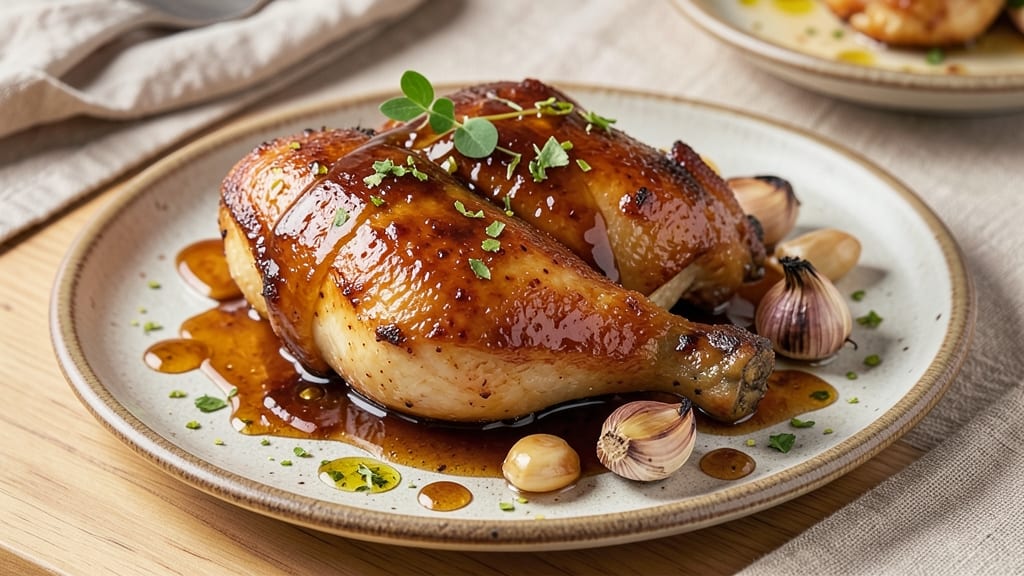
This baked chicken thigh sauce recipe delivers a honey-mustard glaze with caramelized depth that elevates every bite. The balance of sweet and tangy flavors creates a sticky, flavorful coating that clings perfectly to tender chicken thighs.
What makes this sauce special is how the honey and mustard combine during baking, creating a rich glaze that's impossible to resist.
The secret lies in the slow caramelization process, where the sauce thickens naturally without needing thickeners. With just six simple ingredients—honey, Dijon mustard, apple cider vinegar, olive oil, garlic, and a touch of soy sauce—you'll achieve a sauce that's both elegant and approachable.
This recipe is perfect for enhancing baked chicken thighs or drizzling over roasted vegetables.
What you'll end up with is a glossy, amber-colored sauce that's sticky yet balanced, with notes of honeyed sweetness and mustard's sharp tang. The sauce clings beautifully to the chicken, creating a mouthwatering glaze that's worth the extra effort.
It's the kind of sauce that makes ordinary chicken feel like a special occasion dish.
Best of all, this sauce can be made ahead and reheated, making it ideal for meal prep or entertaining. Let's create this flavorful companion for your baked chicken thighs.
Ingredients for baked chicken thigh sauce
Six ingredients transform into a sticky, amber glaze perfect for baked chicken thighs.
| Ingredient | Amount | Notes |
|---|---|---|
| Honey 🍯 | ½ cup | Raw or wildflower preferred |
| Dijon Mustard 🥫 | ⅓ cup | High-quality for best flavor |
| Apple Cider Vinegar 🍎 | ¼ cup | Bragg or organic preferred |
| Extra-Virgin Olive Oil 🫒 | ¼ cup | Fruity, not bitter |
| Garlic Cloves 🧄 | 4 cloves | Freshly minced for aroma |
| Soy Sauce 🍶 | 1 tbsp | Low-sodium preferred |
| Salt 🧂 | ½ tsp | Kosher or sea salt |
| Black Pepper 🌶️ | ¼ tsp | Freshly ground preferred |
The honey drives this sauce's caramelized depth. Raw or wildflower varieties have more floral notes, but any quality honey works—just avoid the overly processed kind. Dijon mustard is non-negotiable here; Maille or whole-grain varieties add texture. Apple cider vinegar should smell fresh and tangy—Bragg or organic brands are my go-tos. The garlic cloves need to be fresh; if you've got a bulb sitting out, use it now. Olive oil matters too—a fruity, extra-virgin like California Gold or Corto keeps the sauce from tasting flat.
No Dijon mustard? Whole-grain mustard thinned with water works in a pinch, but the flavor won't be identical. Substitute apple cider vinegar with white vinegar or lemon juice, though the tang will shift slightly. Skip the soy sauce? A splash of Worcestershire sauce adds umami depth. For extra richness, stir in 1 tbsp of brown sugar with the honey. The sauce thickens as it bakes, so no cornstarch needed—trust the process. If you're prepping ahead, store all ingredients separately until ready to mix.
This sauce keeps beautifully for up to 1 week in an airtight container in the fridge. Reheat gently in a saucepan or microwave until warm. For meal prep, portion into small jars—perfect for drizzling over chicken or roasted veggies. If the sauce thickens too much after refrigeration, thin with 1 tsp of water or vinegar. Freezes well for up to 3 months; thaw in the fridge overnight.
Why You'll Love This Recipe
- I’ll be real: most leftover chicken gets boring. Not this. The sauce stays sticky and flavorful, so reheating it is basically making dinner again—no sad, dry bites here. Plus, it’s cheap to make with pantry staples.
- No-Chop Needed: Honestly, the prep is that simple—just toss the thighs in the sauce, pop them in the oven, and walk away. The garlic and vinegar do all the work while you’re making dinner or scrolling through your phone.
- Sweet-Savory Magic: That honey and Dijon combo? It’s the kind of balance that makes you go back for seconds. The vinegar cuts through the richness, and the garlic? Oh, it’s always the star.
- Weeknight to Potluck: Between us, this sauce works for everything—toss it on chicken for a quick weeknight meal, bring it to a picnic, or serve it at a dinner party. The same flavors just elevate any occasion.
Step-by-step instructions for honey-mustard glaze with caramelized depth
This sauce delivers balanced sweetness, tangy depth, and rich caramelization—perfect for baked chicken thighs.
Combine Wet Ingredients for a Smooth Base
In a medium saucepan, whisk together the 0.5 cup honey, 0.33 cup Dijon mustard, and 0.25 cup apple cider vinegar over low heat. The vinegar will help cut through the sweetness while adding brightness. Let the mixture simmer gently for 3-4 minutes, stirring occasionally, until it begins to thicken slightly and the honey starts to caramelize at the edges.
Here's the thing—you want to see a subtle color change from pale to a deeper amber hue. This indicates the natural sugars in the honey are beginning to break down, creating complex caramelized flavors. If you notice the mixture getting too thick too quickly, add 1 tablespoon water to maintain a pourable consistency.
Infuse with Garlic and Olive Oil
Reduce the heat to low and add the 0.25 cup extra-virgin olive oil and 4 cloves minced garlic. Stir continuously for 2-3 minutes until the garlic becomes fragrant but doesn't brown—you want aroma, not bitterness. The olive oil will help emulsify the sauce and add a smooth, fruity depth that balances the tangy vinegar.
I always use freshly minced garlic here because pre-minced garlic loses its intensity quickly. If you're worried about burning, remember: garlic releases its flavor at 160°F, so keep the heat gentle. You'll know it's ready when the kitchen fills with that unmistakable garlic aroma.
Build Depth with Soy Sauce and Seasonings
Add the 1 tablespoon soy sauce, 0.5 teaspoon salt, and 0.25 teaspoon black pepper to the saucepan. Stir well and let the mixture simmer for another 4-5 minutes until it reduces by about one-third—this concentration intensifies the flavors. The soy sauce adds umami depth while the salt and pepper round out the profile.
Taste the sauce at this stage. It should be tangy, slightly sweet, with a touch of saltiness. If it needs more balance, you can adjust with a pinch more salt or a splash of vinegar. The sauce should coat the back of a spoon smoothly without being syrupy.
Simmer to Perfect Consistency
Continue simmering the sauce on low heat for 5-7 minutes, stirring occasionally, until it reaches a glossy, syrupy consistency that clings to the back of a spoon. You're aiming for a texture that's thick enough to coat but still pourable—this ensures it adheres beautifully to baked chicken thighs without pooling.
Real talk: this is where patience pays off. If you rush it, the sauce will be too thin and runny. If it thickens too much, whisk in 1-2 teaspoons of hot water to loosen it. The ideal sauce should be viscous but not stiff, with a sheen that suggests caramelization without being sticky.
Strain and Cool for Maximum Flavor
Remove the sauce from heat and strain it through a fine-mesh sieve into a clean bowl to remove any garlic bits. Let it cool to room temperature—this allows the flavors to meld fully. The sauce will thicken slightly more as it cools, so don't worry if it looks a bit looser while warm.
This cooling step is non-negotiable. Rushing to use it immediately means missing out on the full development of the sauce's complexity. Once cooled, the honey-mustard glaze will have a rich, balanced profile with caramelized depth, perfect for drizzling over baked chicken thighs or using as a marinade.
Pro Tips For Making Baked Chicken Thigh Sauce
- CRANK THE OVEN HIGH FIRST: The sauce needs to caramelize, not just simmer. Start with 425°F (220°C) for the first 15 minutes—this gets the honey and vinegar sizzling before you lower the heat to 375°F (190°C). I used to bake it at 350°F the whole time, and the sauce always ended up sticky but dull.
- MINCE THAT GARLIC FINE: No, "chopped" isn’t good enough here. Use a knife or microplane to get it into a paste—this way, it blends into the sauce instead of sitting as chunks. I learned this the hard way after pulling out a garlic clove mid-bite.
- WHISK THE SAUCE BEFORE BASTING: The sauce thickens as it bakes, so give it a quick whisk every 10 minutes to keep it glossy and even. I skip this and end up with a gloppy mess that clumps instead of coating the chicken.
- USE RAW HONEY, NOT HEATED: Drizzle the honey straight from the jar—heating it first turns it grainy and ruins the sauce’s silky texture. Add it after the chicken’s been searing for 10 minutes, so it melts into the mustard and vinegar smoothly. (Yes, even if you’re impatient like me.)
Best sauces and condiments for this dish
Sweet-Tangy Balance
This honey-mustard glaze thrives on its perfect balance of sweet and tangy flavors. The ½ cup honey provides natural sweetness while caramelizing beautifully during simmering. Meanwhile, the ⅓ cup Dijon mustard delivers sharp, tangy depth that cuts through the richness.
I always recommend using Maille Dijon for its smooth texture and robust flavor. 🍯
Umami Boost
The 1 tablespoon soy sauce adds essential umami depth that rounds out the sauce's profile. For extra complexity, I sometimes swap in 1 teaspoon fish sauce or Worcestershire sauce—both work beautifully.
The soy sauce also helps balance the sweetness, creating a more sophisticated flavor. Trust me, this small addition makes a world of difference. 🍶
Garlic Infusion
Freshly minced 4 garlic cloves are the secret weapon here, releasing aromatic oils that elevate the sauce. Never use pre-minced garlic—it lacks the intensity you need. I like to let the garlic infuse for 2-3 minutes on low heat until fragrant but not browned.
This step ensures every bite of your baked chicken thighs carries that irresistible garlic punch. 🧄
Vinegar's Role
The ¼ cup apple cider vinegar serves two crucial purposes: it brightens the sauce and prevents it from tasting overly sweet. If you prefer a different tang, white wine vinegar or lemon juice work well, though the flavor profile will shift slightly.
I always use Bragg Organic vinegar for its clean, crisp taste that enhances rather than overpowers. 🍎
Olive Oil Matters
Don't skimp on the ¼ cup extra-virgin olive oil—it's what makes this sauce truly luxurious. A high-quality oil like California Gold adds fruity notes that complement the honey and mustard beautifully.
The oil also helps emulsify the sauce, giving it that perfect glossy finish. I promise, this is where you'll notice the difference between good and great. 🫒
Seasoning Secrets
The ½ teaspoon salt and ¼ teaspoon black pepper are easy to overlook, but they're essential for rounding out the flavors. I always taste the sauce before finishing and adjust as needed—sometimes it needs just a pinch more salt or a crack of pepper.
Freshly ground black pepper adds a subtle heat that complements the sweet-tangy profile perfectly. 🌶️
Nutrition facts
Frequently asked questions
Can I make this sauce ahead of time?
This honey-mustard glaze keeps beautifully in an airtight container in the fridge for up to 1 week. Reheat gently in a saucepan over low heat or microwave until warm. For meal prep, portion into small jars—perfect for drizzling over baked chicken thighs or roasted vegetables. If it thickens too much after refrigeration, thin with 1 teaspoon of water or vinegar.
What if my sauce turns out too thick or too thin?
If your sauce is too thick, whisk in 1-2 teaspoons of hot water to loosen it. For a thinner consistency, add 1 teaspoon of vinegar or water while simmering. The ideal texture should be viscous but pourable, clinging beautifully to chicken without pooling. Adjust gradually—you can always thicken it again later by simmering longer.
Can I use this sauce on other proteins?
Yes! This versatile glaze works wonderfully on pork chops, salmon fillets, or even tofu for a vegetarian option. The sweet-tangy balance complements grilled vegetables too. For best results, brush the sauce on during the last 10-15 minutes of cooking to prevent burning.
Why does my sauce separate or look oily?
Separation happens when the sauce isn't emulsified properly. Stir in 1 teaspoon of Dijon mustard or a splash of vinegar to re-combine. For a smoother texture, whisk vigorously or blend briefly with an immersion blender. High-quality olive oil and gentle simmering help prevent this—never boil the sauce.
How can I make this sauce spicier?
Add ½ teaspoon of cayenne pepper or 1 teaspoon of hot sauce while simmering. For smoky heat, stir in ½ teaspoon of smoked paprika with the garlic. Always taste as you go—start with half the amount and adjust to your preference. The sauce's sweetness balances heat beautifully!