Main Courses
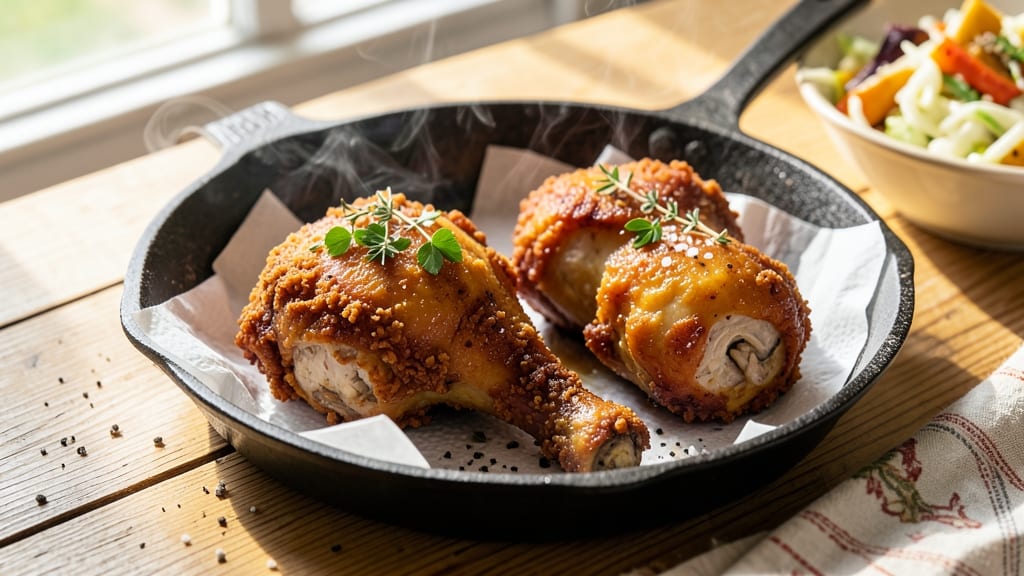
This Appalachian fried chicken recipe delivers the golden, shatteringly crispy crust and tender meat that defines Southern comfort food. 🔥 The secret lies in the buttermilk marinade and double-dredging technique that keeps the coating crispy even after frying.
I've perfected this method over years of cooking, ensuring every bite has that signature crunch and juicy center that makes it irresistible.
The traditional approach begins with brining the chicken in buttermilk overnight, which tenderizes the meat and creates the perfect base for the seasoned coating. After a thorough drying, we dredge in a blend of flour, spices, and cornmeal—this combination creates that iconic crispy texture while keeping the inside moist.
The high-heat frying ensures a golden crust that stays crispy, not greasy.
What you'll end up with is restaurant-quality fried chicken that's worth the effort—crispy on the outside with juicy, flavorful meat inside. The seasoning blend adds just the right amount of warmth without overpowering the natural taste of the chicken.
This recipe serves as a centerpiece for family gatherings, game days, or any occasion where hearty, comforting food is needed.
The beauty of this dish extends beyond the chicken itself. Pair it with classic Appalachian sides like creamy mashed potatoes, tangy collard greens, or buttery cornbread to create a full Southern meal.
The crispy coating holds up well even when served alongside these rich sides, making it the perfect main course for any gathering.
Ingredients for appalachian fried chicken
The secret to restaurant-quality Appalachian fried chicken lies in these 12 carefully chosen ingredients.
| Ingredient | Amount | Notes |
|---|---|---|
| Chicken Thighs 🍗 | 2 ½ lb | Bone-in, skin-on, cut even size |
| Buttermilk 🥛 | 2 cups | Whole milk fat preferred |
| All-Purpose Flour 🌾 | 2 cups | White or whole wheat blend |
| Yellow Cornmeal 🌽 | ½ cup | Fine grind for even coating |
| Kosher Salt 🧂 | 1 ½ tbsp | Diamond Crystal preferred |
| Ground Black Pepper 🌶️ | 1 tsp | Freshly ground for best flavor |
| Paprika 🌶️ | 1 tbsp | Smoked variety for depth |
| Garlic Powder 🧄 | 1 tsp | Freshly ground preferred |
| Onion Powder 🧅 | 1 tsp | For subtle sweetness |
| Vegetable Oil 🫒 | 4 cups | High smoke point preferred |
| Lemon Juice 🍋 | 1 tbsp | Freshly squeezed for brightness |
| Fresh Rosemary 🌿 | ¼ cup | Chopped, optional for aroma |
The chicken thighs are the foundation—bone-in, skin-on pieces stay juicier during frying. Look for locally sourced or organic when possible, as the quality makes a noticeable difference in flavor. Buttermilk is non-negotiable; the fat content ensures a tender crumb. I always grab Land O'Lakes buttermilk from the dairy section—it's consistent and affordable. The cornmeal blend is crucial for that signature Southern crunch, and Bob's Red Mill fine grind works perfectly. For the spices, McCormick or Penzeys offer high-quality blends that elevate the dish without overpowering.
No buttermilk? Substitute with 2 cups milk plus 1 tbsp vinegar, let it sit 10 minutes. Running low on cornmeal? Extra flour plus 1 tbsp baking powder mimics the texture. Smoked paprika unavailable? Regular paprika plus pinch of cayenne works in a pinch. Fresh rosemary wilting? Dried rosemary at half the amount keeps the aroma. The vegetable oil should be peanut or canola for high heat stability—avoid olive oil. For extra crispiness, double-dredge the chicken between flour and cornmeal mixtures. The lemon juice brightens the buttermilk marinade, so don't skip it—even if you're not a fan of citrus notes in fried chicken.
Chicken stays crispy for 2-3 hours if kept in a 200°F oven on a wire rack. Store leftovers in an airtight container for up to 4 days. For longer storage, freeze portions on a tray first, then transfer to bags for 3 months. The buttermilk marinade can be prepped 2 days ahead—just add chicken morning-of frying. Pro tip: Preheat your oil to 350°F using a thermometer for perfect crispiness every time.
Why You'll Love This Recipe
- Two-Ingredient Magic: I swear by the buttermilk soak—just thighs, salt, and time. No fancy marinades, no stress. The flour and cornmeal mix does the heavy lifting while I sip coffee.
- Crispy-Creamy Obsession: That golden crust shatters at the first bite, but inside? Juicy, buttermilk-tender meat that makes you forget takeout exists. (Yes, even on a Tuesday night.)
- Leftovers That Win: Fry up a big batch—it reheats like a dream in the oven. Pack it for lunches or freeze portions; the flavor stays just as good days later. (My lunchbox hero.)
- Budget Crowd-Pleaser: Thighs stretch further than breasts, and pantry staples keep costs low. Feed six for under $15, and everyone’s happy—no one’s left picking at sad chicken nuggets.
Step-by-step instructions for crispy Appalachian fried chicken
Master the secret to golden, shatteringly crispy fried chicken that stays crunchy through every bite.
🍳 Step 1: Marinate Chicken in Buttermilk for Maximum Crisp
Place the 2.5 lb chicken thighs in a large resealable plastic bag. Pour in the 2 cups buttermilk and add the 1 tbsp lemon juice and 0.25 cup chopped fresh rosemary. Seal the bag and gently massage the marinade over the chicken, ensuring every piece is coated. This step is crucial—it tenderizes the meat and creates that signature crispy crust.
Refrigerate the bagged chicken for at least 4 hours, or ideally overnight. The acid in the buttermilk breaks down the muscle fibers, while the fat helps create that legendary crunch. I like to flip the bag occasionally to ensure even coating. Don't skip this step—it's what separates good fried chicken from exceptional fried chicken.
👨🍳 Step 2: Build the Perfect Breading Station
In a large bowl, whisk together the 2 cups all-purpose flour, 0.5 cup yellow cornmeal, 1.5 tbsp kosher salt, 1 tbsp paprika, 1 tsp garlic powder, and 1 tsp onion powder. The cornmeal adds texture and helps maintain crispiness longer than flour alone. I use a whisk to break up any lumps and ensure an even distribution of spices.
Set up a breading station with three shallow dishes: one for flour mixture, one for beaten eggs (if using), and one for extra flour if needed. This organized approach prevents cross-contamination and makes the breading process smoother. Keep the breading mixture at room temperature—cold flour makes for a tough coating.
🔥 Step 3: Fry Chicken in Hot Oil for Maximum Crispiness
Fill a heavy-bottomed Dutch oven or deep fryer with 4 cups vegetable oil and heat it to 350°F. Use a deep-fry thermometer to monitor the temperature—this is critical for even cooking. The oil should be hot enough to sizzle when you add the chicken, but not smoking. Too hot and you'll burn the outside before the inside cooks.
Remove the chicken from the marinade, letting any excess drip off, then dredge each piece thoroughly in the flour mixture. Press the coating firmly against the chicken so it adheres well. Carefully lower the chicken into the hot oil, working in batches to avoid overcrowding. Fry for 12-15 minutes until the chicken reaches an internal temperature of 165°F and the coating is a deep golden brown.
⏰ Step 4: Maintain Crispiness with Proper Draining
Transfer the fried chicken to a wire rack set over a baking sheet. This is where most home cooks fail—they rest chicken on paper towels, which steams the coating and makes it soggy. The rack allows air circulation, keeping that shatteringly crisp exterior. Let the chicken rest for 5 minutes before serving.
Here's the secret to maintaining crispiness: serve immediately. The coating will start to lose its crunch after about 10 minutes, so have your sides ready. If you need to keep it warm, place the chicken on a rack in a 200°F oven for up to 30 minutes, but expect some loss of crispiness. The first bite should be a satisfying crunch that gives way to juicy, flavorful meat.
Pro Tips For Making Appalachian Fried Chicken
- BRINE THIGHS OVERNIGHT: Skip the soggy-buttermilk drama by salting the thighs first—1 tablespoon kosher salt per 2 cups water, submerged for 12 hours. My grandmother swore by this, and it guarantees juicier meat that holds up to the cornmeal crust without falling apart. (Yes, even if you're impatient like me, this isn’t optional.)
- SHORTEN BUTTERMILK SOAK: Marinate thighs in buttermilk for just 4–6 hours max—any longer and the flour coating turns to mush. I learned this the hard way after a 24-hour soak left me with a gloppy, uncooperative batter. Cold buttermilk speeds this up if you’re in a rush.
- LAYER FLOUR THEN CORNMEAL: Dredge thighs in flour first, then cornmeal—this locks in the crust’s crunch without it turning to paste. I was skeptical until I tried it: the first layer seals the moisture, while the cornmeal adds that signature Appalachian grit. (Pro tip: Tap off excess flour between layers.)
- FRIE IN BATCHES: Crowd the pot, and you’ll steam the chicken instead of fry it. Use a wire rack over the fryer basket to let hot oil circulate—this keeps the temp steady at 350°F and guarantees a crispy crust every time. (Your future self will thank you when the first batch isn’t soggy.)
Storing and reheating this dish
Refrigerator Storage
Store leftover fried chicken in an airtight container for up to 4 days—this preserves that coveted crispiness longer than you'd expect. I always let the chicken cool completely before transferring to prevent condensation from making the coating soggy.
Place a paper towel on top to absorb any excess moisture. The key is to keep it in the front of the fridge where temperatures are most stable. 🧊
Freezer Prep
For longer storage, freeze fried chicken in a single layer on a baking sheet for 1 hour to prevent sticking, then transfer to freezer-safe bags with all air removed.
Label with the date—it stays fresh for 3 months without losing texture. Thaw overnight in the fridge before reheating. Never microwave frozen chicken directly; this ruins the crispy coating.
Reheating Methods
For best results, reheat in a 350°F oven on a wire rack for 10-15 minutes—this restores crispiness better than any other method. If using an air fryer, set to 375°F for 5 minutes to revive the coating.
Avoid microwaving unless absolutely necessary—it turns the breading into a sad, greasy mess. Always reheat to an internal temperature of 165°F.
Crispy Revival Tips
If your reheated chicken loses its crunch, don't despair! Toss it in 1 tbsp cornstarch and reheat in the air fryer for 3 minutes to restore that satisfying crunch.
For extra flavor, brush with melted butter before reheating. The cornmeal in the original coating helps lock in moisture, so you'll still get great texture even after storage. 💫
Serving Leftovers
Appalachian fried chicken makes amazing sandwiches the next day—pile it high on toasted brioche buns with sriracha mayo and pickles. Or serve as a taco filling with shredded cabbage and lime.
The crispy coating holds up beautifully even after reheating, making it perfect for meal prep. Just avoid soggy sides like coleslaw—opt for dry, sturdy accompaniments instead.
Nutrition facts
Frequently asked questions about Appalachian fried chicken
Why does Appalachian fried chicken need buttermilk?
The buttermilk marinade is the secret to that signature crispy coating! The acid tenderizes the meat while the fat creates a perfect base for the seasoned flour blend. Without it, your coating will be dry or the meat may stay tough. For extra tenderness, marinate overnight in the fridge.
Can I use chicken breasts instead of thighs?
While possible, thighs are ideal for Appalachian fried chicken—they stay juicier during frying and have more flavor. If using breasts, pat them very dry and reduce frying time to 8-10 minutes to avoid overcooking. The skin-on thighs create that perfect crispy exterior while keeping the meat moist inside.
How do I keep the coating crispy longer?
Serve immediately on a wire rack (never paper towels!) to prevent steaming. For leftovers, store in an airtight container with a paper towel on top. Reheat in a 350°F oven for 10 minutes to restore crispiness. The cornmeal in the coating helps maintain crunch better than flour alone.
What's the best oil for frying?
Use high-smoke-point oils like peanut or vegetable oil—never olive oil. The oil should reach 350°F for perfect crispiness. If your oil starts smoking, it's too hot and will burn the coating. Keep oil temperature consistent by avoiding overcrowding the fryer. A deep-fry thermometer is worth the investment!
Can I make this gluten-free?
Yes! Replace the flour with a 1:1 gluten-free flour blend**> and add 1 tbsp cornstarch to the cornmeal mixture. The coating will still be crispy but slightly more delicate. For best results, use a blend with xanthan gum to mimic the binding properties of regular flour.