
Soups & Stews
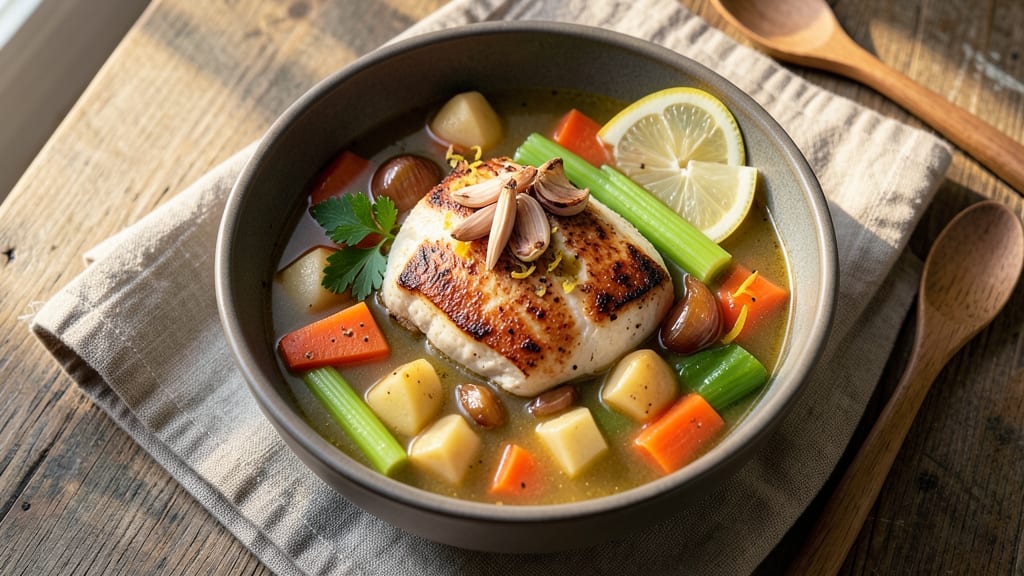
This 5-star chicken vegetable soup delivers restaurant-quality comfort in a single bowl, where aromatic herb-infused broth meets perfectly tender chicken and crisp-tender vegetables. The secret lies in slow-simmered flavors—carrots caramelizing, celery softening, and bay leaves releasing their earthy essence—while the chicken poaches to tender perfection without drying out.
Every spoonful balances richness and freshness, making it a weeknight staple that feels like a gourmet embrace.
What sets this recipe apart is the layered approach: first building a deeply flavorful base with onions, garlic, and herbs, then adding vegetables in stages so they cook to ideal textures—al dente carrots and celery, wilted greens, and just-firm potatoes.
The broth reduces slightly to concentrate its savory depth, while a splash of lemon at the end brightens the finish. It’s the kind of soup that warms both body and soul, with each ingredient playing its part in harmony.
By the time you serve it steaming hot in deep bowls, garnished with fresh parsley and a drizzle of olive oil, you’ll understand why this earns 5-star praise.
The chicken falls apart at the touch of a spoon, the vegetables retain their natural sweetness, and the broth sings with herbal notes. It’s the ultimate comfort dish—simple enough for weeknights but sophisticated enough for company, with every element working together to create something truly exceptional.
Perfect for meal prep (it tastes even better the next day), this soup scales effortlessly from family dinners to holiday gatherings. The technique is straightforward, but the result is anything but ordinary—proof that restaurant-quality meals can be yours with just a few hours of simmering. Let’s get cooking!
Ingredients for 5 star chicken vegetable soup
Sixteen ingredients transform into a fragrant, restaurant-worthy soup where tender chicken and vegetables harmonize in herb-infused broth.
| Ingredient | Amount | Notes |
|---|---|---|
| Boneless, Skinless Chicken Breast 🍗 | 2 lb | Pounded to even thickness |
| Yellow Onion 🧅 | 1 whole | Diced, medium size |
| Celery Stalks 🧄 | 4 whole | Trimmed and chopped |
| Carrots 🥕 | 4 medium | Peeled and sliced |
| Russet Potatoes 🥔 | 2 medium | Peeled and cubed |
| Garlic Cloves 🧄 | 4 cloves | Minced, fresh preferred |
| Fresh Parsley 🌿 | ¼ cup | Chopped, for garnish |
| Fresh Thyme 🌿 | 1 tbsp | Leaves only, stems removed |
| Fresh Bay Leaves 🍃 | 2 whole | For depth of flavor |
| Extra-Virgin Olive Oil 🫒 | ¼ cup | For sauteing vegetables |
| Low-Sodium Chicken Broth 💧 | 6 cups | Homemade or high-quality |
| Lemon Juice 🍋 | 1 tbsp | Freshly squeezed |
| Salt 🧂 | 1 ½ tsp | Diamond Crystal preferred |
| Ground Black Pepper 🌶️ | ½ tsp | Freshly cracked |
| Fresh Spinach 🌱 | 2 cups | Chopped, for finishing |
The chicken breast is critical here—look for uniformly sized pieces at Whole Foods or your local butcher for the best texture. Pounding the breasts to even thickness ensures they cook perfectly without drying out. For the vegetables, organic carrots and celery from the produce section have more natural sweetness, but conventional works fine. Fresh thyme and bay leaves are non-negotiable—they create that restaurant-quality depth. I always grab Penzeys dried herbs if I'm running low, but fresh is ideal for this dish. The potatoes should be firm with no sprouts, and russets hold up best during cooking.
No fresh thyme? Dried thyme at one-third the amount works in a pinch, but the flavor won't be as bright. Substituting low-sodium broth with homemade? Roast your own chicken bones for maximum flavor—simmer them with onions, carrots, and celery for 4 hours, then strain. For the spinach, frozen works perfectly if fresh isn't available, but Trader Joe's has the best pre-washed bags for convenience. The lemon juice is essential for that final bright note—never skip it. If you're making this ahead, the lemon can be added just before serving to preserve its freshness.
This soup tastes even better the next day as the flavors meld together. Store leftovers in the fridge for up to 5 days, or freeze portions for 3 months—the broth actually concentrates and deepens in flavor when reheated. I like to portion it into glass containers for easy reheating. For meal prep, double the recipe and freeze half—perfect for busy weeknights. The fresh parsley and olive oil drizzle should always be added fresh before serving to maintain that restaurant-quality presentation.
Why You'll Love This Recipe
- One-Pot Magic: I swear by this recipe when I’m too tired to wash a million dishes. Toss everything—chicken, onions, celery, carrots, potatoes—into one pot with broth, and let it simmer. No chopping boards to clean, no separate pans—just stir, wait, and enjoy.
- Savory Depth: The chicken stays juicy while the potatoes soften just enough to soak up the broth. That crisp-tender carrot and celery combo? It’s like a little crunchy surprise in every bite—honestly, I’ve had people ask what’s in it.
- Meal Prep MVP: Make a big batch on Sunday, and you’ve got lunch or dinner covered for days. The flavors actually get better as it sits, and reheating takes less time than ordering takeout. (Yes, even on a Tuesday night.)
- Budget-Friendly Powerhouse: Chicken breast and potatoes stretch into a whole meal without breaking the bank. I’ve fed four people for under $10, and we all leave happy. Plus, leftovers taste just as good—if not better—cold the next day.
Step-by-step instructions for fragrant herb-infused chicken vegetable soup
Here's how to craft a restaurant-quality soup with rich aromatics and perfectly tender components.
Sear and Poach the Chicken Breast
Begin by pounding the 2 lb boneless, skinless chicken breast to an even ½-inch thickness between two sheets of plastic wrap. This ensures even cooking and prevents dryness. Season both sides generously with ½ tsp salt and ¼ tsp black pepper, then heat ¼ cup extra-virgin olive oil in a large Dutch oven over medium-high heat.
Add the chicken and sear for 3-4 minutes per side until the exterior develops a golden-brown crust. Remove the chicken and set aside. The key here is to maintain that crust while keeping the interior tender—this is where the soup's depth of flavor begins. Reduce the heat to medium and add the 1 whole diced yellow onion, 4 chopped celery stalks, and 4 sliced carrots. Sauté for 5 minutes until the vegetables soften slightly and begin to release their natural sweetness.
Build the Herb-Infused Broth
Add 2 cubed russet potatoes, 4 minced garlic cloves, 1 tbsp fresh thyme leaves, and 2 whole fresh bay leaves to the pot. Pour in 6 cups low-sodium chicken broth and bring to a gentle simmer. The broth should just barely bubble—medium-low heat is ideal to prevent boiling, which can make the soup cloudy. Skim off any foam that rises to the surface during the first 3 minutes of simmering.
Return the seared chicken breast to the pot, ensuring it's fully submerged. Add 1.5 tsp salt and 0.5 tsp black pepper, then cover partially and simmer for 15 minutes. The chicken should now be tender enough to pierce easily with a fork—this is critical for achieving that melt-in-your-mouth texture. If the broth reduces too quickly, add ½ cup hot water to maintain the proper consistency.
Finish with Aromatics and Spinach
Remove the chicken breast from the pot and let it rest on a cutting board for 5 minutes. Meanwhile, stir in 1 tbsp freshly squeezed lemon juice and taste the broth. Adjust seasoning if needed—this is where the soup's brightness comes through. The broth should be well-seasoned but not overpowering, with the herbs contributing a subtle, fragrant complexity.
Shred the chicken using two forks, discarding any bones or connective tissue. Return the shredded chicken to the pot and stir gently to combine. Add 2 cups chopped fresh spinach and simmer for an additional 2 minutes until the spinach wilts completely. The spinach should be just tender enough to hold its shape but still vibrant in color—a visual cue that it's perfectly incorporated.
Garnish and Serve with Precision
Ladle the soup into bowls, ensuring each serving gets an even distribution of chicken, vegetables, and broth. Garnish each portion with ¼ tbsp chopped fresh parsley for a pop of color and freshness. The parsley not only enhances the visual appeal but also adds a bright, herbal note that complements the rich broth.
Serve immediately while the soup is steaming hot. The contrast between the silky broth, tender chicken, and al dente vegetables creates a harmonious balance of textures and flavors. Each spoonful should deliver a symphony of aromatics—sweet carrots, earthy celery, savory chicken, and the subtle herbal notes from thyme and bay leaves. This is the moment where all your effort transforms into a truly exceptional dish.
Pro Tips For Making 5 Star Chicken Vegetable Soup
- Sear the Chicken First: I learned this the hard way—skipping the sear means bland chicken in soup. Pat the breasts dry, then hit them with a hot pan for 2-3 minutes per side until golden. The crust locks in flavor and keeps the meat from turning to rubber in the broth.
- Cut Potatoes Uniformly: Uneven potatoes mean some mushy, some undercooked. Slice the russets into 1-inch chunks—no smaller, or they’ll disintegrate. If you’re in a rush, buy pre-cut dice, but don’t skip the quick rinse to remove excess starch that clouds the broth.
- Salt the Water Generously: This isn’t the prettiest method, but it’s the tastiest. Use 2 tablespoons of salt for every 4 quarts of water—yes, even if you’re adding broth later. The high salt early on seasons the chicken and veggies deeply, and you can always dilute it with water or broth afterward.
- Add Potatoes Last: I used to toss them in with the onions and celery, and they’d turn to mush. Potatoes need 10-12 minutes of simmering to hit that perfect tender-but-firm texture. Drop them in 5 minutes before the chicken is done—no peeking, or you’ll overcook them.
Pro cooking tips for this dish
Broth Perfection
Start by simmering your broth at a gentle medium-low heat—never a rolling boil. This prevents cloudiness and allows flavors to meld naturally. I use a large Dutch oven with a tight-fitting lid to trap aromatics.
Skim off any foam that rises during the first 3 minutes—this removes impurities and keeps your broth crystal clear. The secret to depth? Let the broth reduce slightly by 10-15% before adding the chicken. This concentrates the flavors without overcooking the vegetables. 🌡️
Chicken Texture
Pounding the chicken to ½-inch thickness is non-negotiable—it ensures even cooking. Sear it until golden brown before poaching to develop a rich crust that adds flavor. For the poaching step, maintain a temperature between 185-195°F—use a thermometer to monitor.
The chicken should reach 165°F internal temperature after 15 minutes of simmering. If it cooks too quickly, reduce the heat and cover the pot to slow the process.
Vegetable Staging
Add potatoes and carrots first since they need the most time to soften. Celery and onions go in with the chicken for a 5-minute sauté before simmering. Spinach gets the final 2 minutes—just enough to wilt without losing its vibrant color.
This staging ensures each vegetable reaches perfect tenderness without turning mushy. I always taste-test the broth before adding spinach to adjust seasoning.
Herb Infusion
Fresh thyme and bay leaves are your flavor anchors. Add them to the pot with the potatoes and garlic—their oils infuse the broth during simmering. For extra depth, toast the bay leaves in the pot for 30 seconds before adding liquid.
Remove them before serving to avoid bitterness. A splash of lemon juice at the end brightens the entire dish—trust me, it makes all the difference. 💫
Garnish Like a Pro
Fresh parsley isn't just decoration—it adds a bright herbal note that cuts through the richness. Use ¼ tbsp per bowl and sprinkle it right before serving. For an extra touch, drizzle with high-quality extra-virgin olive oil (I love California Gold) and a pinch of cracked black pepper.
This final step elevates the presentation from homey to restaurant-worthy.
Nutrition facts
Frequently asked questions
Can I substitute chicken thighs for breasts in this recipe?
Yes, but adjust the cooking time! Chicken thighs stay juicier and develop more flavor, so simmer them for just 10-12 minutes after adding to the broth. They'll reach 165°F faster than breasts. Skip the searing step—they don't need it. For best results, use bone-in thighs to boost broth flavor.
How do I make this soup gluten-free?
Use a certified gluten-free chicken broth and check all vegetable labels (especially potatoes and broth). The recipe is naturally gluten-free except for the broth. For extra safety, toast your bay leaves in the pot for 30 seconds before adding liquid—some brands process them in shared facilities. Always verify ingredient sources when avoiding gluten.
Why does my broth turn cloudy when simmering?
Cloudiness usually means you're boiling too vigorously or didn't skim the foam. Maintain a gentle simmer at medium-low heat and skim foam for the first 3 minutes. If it's already cloudy, strain the broth through a fine-mesh sieve before adding chicken. For extra clarity, chill the broth overnight and remove any congealed fat before reheating.
Can I prepare this soup ahead of time?
This soup tastes even better the next day as flavors meld. Store in airtight containers for up to 5 days in the fridge or 3 months frozen. Reheat gently on the stove—never microwave—adding ½ cup water if needed to restore consistency. Add fresh parsley and lemon juice just before serving to maintain brightness.
What's the best way to reheat leftovers?
Reheat on the stove over medium-low heat until steaming hot (165°F). For frozen portions, thaw overnight in the fridge first, then reheat. Never reheat directly from frozen—this can make the chicken rubbery. If the broth seems too thick after reheating, add ¼ cup hot water to restore proper consistency. Stir gently to avoid breaking up the vegetables.